Can AI models replace human models? What changes and what does not

Every few months a headline announces that AI models are about to replace human models. A few weeks later a brand is praised for hiring more human models than ever. Both stories are true, and neither tells a fashion brand what to do on Monday.
The honest answer to "can AI models replace human models?" is that it depends on what you are asking the model to do. Some jobs are being taken over quickly. Others are not, and may never be.
This guide separates the two. It looks at what a human model and an AI model each actually deliver, where AI is already the better fit, where a person is still essential, and how brands are mixing the two without a fight.
What each one actually delivers
A human model brings a body, a face, a presence and a point of view. On a shoot they respond to direction, change the mood of a frame with a glance and make a thousand small decisions no brief covers. They are also bound by time: one person, one day, one location, one set of looks.
An AI model, as Botika builds it, is a consistent digital person that wears your garment in a scene you choose. It does not need a studio slot, it can appear in a new setting in minutes, and the same face and body can wear every product in your range. Our guide to how AI fashion models work covers the process step by step.
The difference is not quality against quality. It is a different kind of output. A human model gives you a performance. An AI model gives you coverage and consistency.
Where AI models already do the job
Four kinds of work have moved fastest, and they have one thing in common: a lot of images of the same kind.
Product detail pages. A shopper wants to see the garment clearly, from several angles, on a body. The model's personality matters less than the clarity of the fit and fabric. This is the largest share of imagery most brands produce, and it is where AI models are most used.
Long-tail catalogue. Every brand has products that never get a shoot because the budget ran out. Putting those on a model, instead of leaving them as flat lays, is a clear gain.
Size and range coverage. Showing the same garment on a wider range of bodies, ages and skin tones is hard to afford with a hired cast. It is far easier with a library of models. Our piece on AI models and fashion diversity looks at what this can and cannot do.
Variations and refreshes. New backgrounds, seasonal settings and market-specific looks are cheap to make once the base exists.
Where a person still wins
Some work depends on exactly the things AI does not supply.
Campaigns built on a personality. If your brand is known through a particular face, a muse or a named ambassador, that person is the point. An AI image cannot stand in for someone people follow.
Live and moving work. Runway, events, appearances and anything that needs real presence in a room belong to people.
Real-body proof. When the claim is that this garment looks like this on a real person, such as a fit test or a testimonial, you want a real person.
Creative direction that needs a collaborator. Some of the best fashion images come from a model and photographer improvising. That is a human process, and it is worth protecting.
For campaigns, our guide to AI-generated models versus real models for lookbooks sets out how to choose.
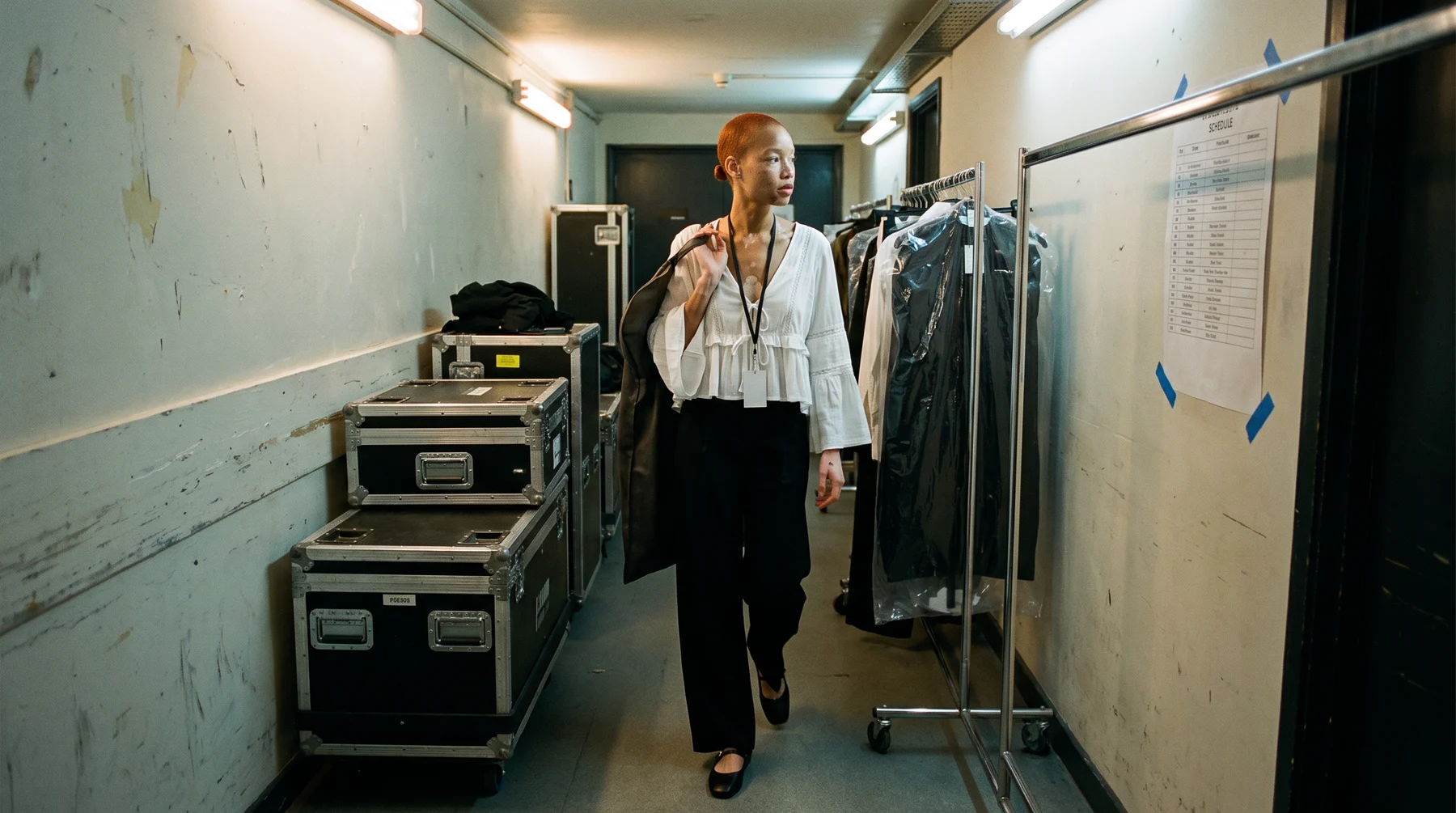
What it means for the people who model
The fear is real, and it deserves a straight reply. Where brands used to book a model for a day of catalogue work, some of that work will not be booked. The jobs most exposed are repetitive, low-variation shoots: the same pose, the same plain background, dozens of products.
Work that rewards personality, movement and a recognisable look is far less exposed. Brands that depend on a face as part of the story are not going to swap it for an image generator.
A fair reading is that the mix of work is changing, not that the profession is ending. The models who do well will be the ones brands want to work with for campaigns, collaborations and moments that need a person.
Brands also carry a responsibility here. Be open about what is AI and what is not. Our guide to authenticity and disclosure for AI fashion models covers the current rules and plain wording.
A split most brands settle on
Look at brands that use AI models in public and a pattern appears. They do not move everything. They move the volume work and keep people for the hero. The timeline in what happened next for fashion brands using AI models shows how reactions followed how the brand framed the change.
A workable split looks like this:
- AI models for product pages, the long tail, size and range coverage, seasonal refreshes and market variations.
- Human models for campaigns, brand ambassadors, live work and anything where the person is the story.
- A shared brief so both sit under the same look, tone and standards.
The shared brief is the part brands skip. If the human campaign and the AI product pages look like two different companies, shoppers notice, even if they cannot say why.
How to decide, one job at a time
Do not ask whether AI should replace human models in general. Ask, for each kind of image you make, four questions.
- Does the image sell the garment or the person? If it is the garment, AI is a strong candidate. If it is the person, keep the person.
- How many images of this kind do you need? High volume favours AI. A single hero favours a shoot.
- How often does it change? Frequent refreshes favour AI. A once-a-year campaign does not.
- What does the shopper need to believe? If the claim is about fit on a real body, show a real body.
Run those four questions on your last collection and sort the images into two piles. Most brands find a clear majority fall on the AI side, and a small number of important images stay with people. If you want to see your own products on a model, you can try Botika on a few styles, and review the available models before you commit.
Common questions about AI models and human models
Can AI models replace human models?
For some jobs, yes. Product pages, long-tail catalogue and variations are already done with AI models. Campaigns built on a personality, live work and real-body proof still need people.
What is the difference between an AI model and a human model?
A human model delivers a performance and a point of view, limited by time and place. An AI model delivers consistency and coverage: the same digital person can wear any garment in any scene on demand.
Which work is most exposed to AI?
Repetitive, low-variation shoots, such as the same pose on a plain background across many products. Work that depends on personality, movement or a recognisable face is far less exposed.
Should brands use both AI and human models?
Most do. A common split is AI models for volume work and human models for campaigns, ambassadors and live work, under one shared brief so the look stays consistent.
Do brands have to disclose AI models?
Rules vary by market and are changing. Plain labelling is good practice, and our guide on authenticity and disclosure covers current requirements.
How should a brand start?
Sort your last collection's images by job. Move the high-volume product images to AI models first, keep people for the hero work, and review the results against your own conversion and return data.