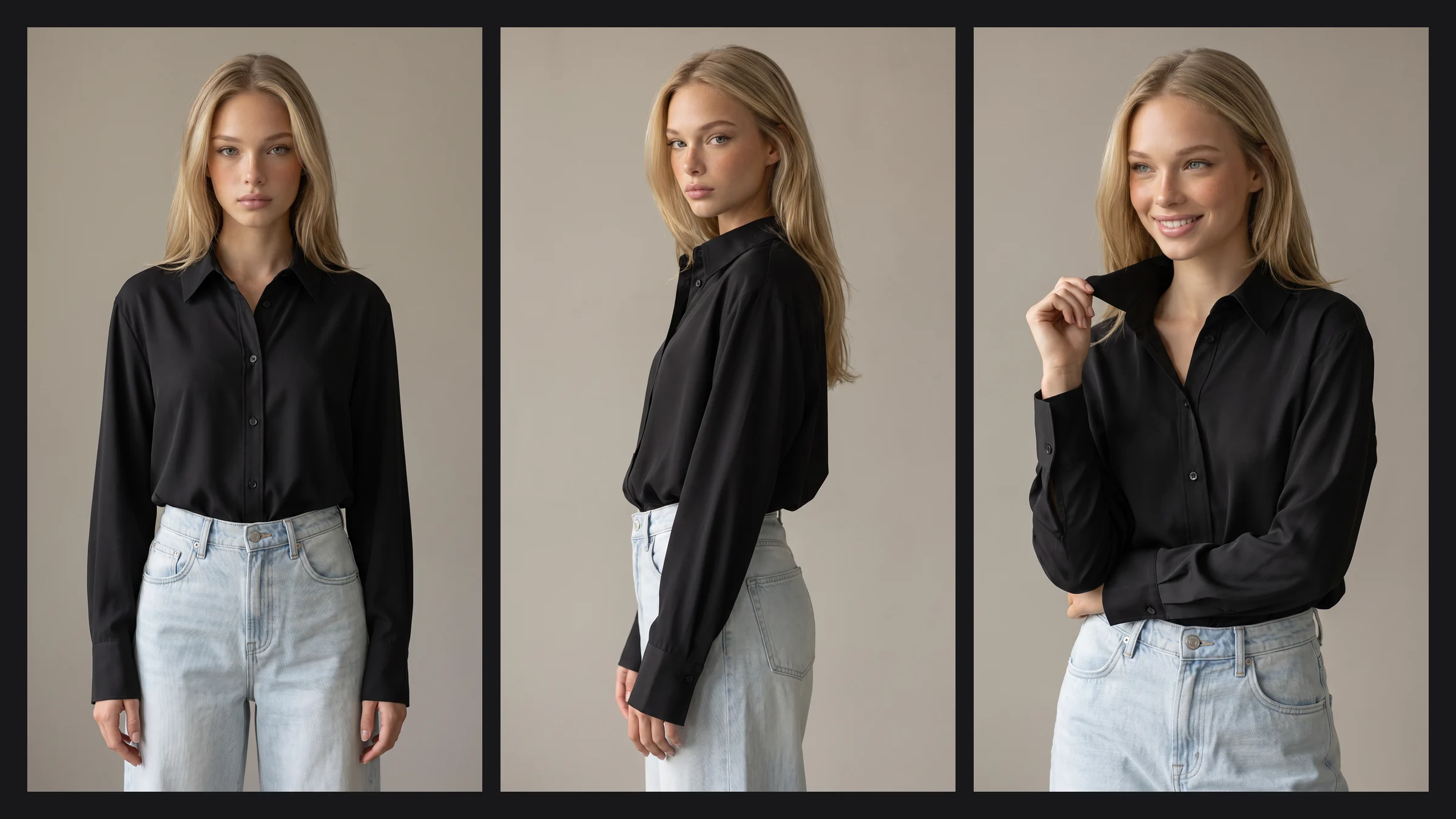
Authenticity and disclosure for AI fashion models


A year ago the question brands asked about AI fashion models was whether the pictures looked real enough. Now it is two questions: are they honest, and do we have to say they are AI?
The answers have moved from opinion to law in places. The EU's transparency rules for AI-generated content apply from 2 August 2026, and New York has required disclosure of synthetic performers in advertising since June.
Authenticity in AI fashion imagery means the picture is an honest depiction of the product and is described honestly. Disclosure means telling people an image was made with AI where a rule or good practice calls for it.
This guide separates the two, sets out what the main rules say, and gives a way to write a labelling policy without waiting for a legal team. It is a practical guide, not legal advice.
Authentic means accurate, not just photographic
It is tempting to treat authenticity as a visual test: does the person look real? That matters, and our guide to realistic AI model creation covers it. But a convincing face on an inaccurate garment is less authentic than a plainly synthetic one on an accurate garment.
A more useful definition has four parts:
1. The product is true. Colour, cut, fabric and details match the real garment. At Botika the image starts from your own product photo, so the garment comes from the real piece.
2. The people are not misrepresented. A generated model is not presented as a customer, a reviewer or a named influencer. That is a deception problem long before it is a labelling problem.
3. The context is honest. No invented testimonials, no fake user photos, no implied event that did not happen.
4. The method is not hidden. If someone asks how the images were made, the brand has a straight answer.

Where the rules stand in October 2026
Rules differ by market and keep changing, so treat this as a map to check with counsel, not a verdict. Three are worth knowing now.
The EU AI Act. Article 50 sets transparency duties. Deployers of an AI system that generates or manipulates deepfake image, audio or video content must disclose that it was artificially generated or manipulated. The text of Article 50 applies from 2 August 2026.
Where the content is part of an evidently artistic, creative or similar work, the duty is narrower: disclose that the content exists, in a way that does not hamper how the work is displayed. Providers of generation tools carry separate marking duties.
New York's synthetic performer law. The state's General Business Law section 396-b requires an advertisement to conspicuously disclose a synthetic performer when its producer knows one appears. It took effect in June 2026. Civil penalties are $1,000 for a first violation and $5,000 for each one after. Advertisements for expressive works, audio-only advertisements and uses limited to translating a human performer's language are exempt.
Product feeds. Google Merchant Center asks that AI-generated product images keep their embedded IPTC metadata, including the digital source type tag that marks them as generated. Stripping metadata during export, compression or hosting can break that.
What is a synthetic person, and what is a deepfake?
These terms are not interchangeable. In New York, a synthetic performer is a digitally created asset made to give the impression of a visual or audiovisual human performance, where the performer is not recognizable as an identifiable real person. A fashion model generated from scratch fits that description.
In the EU, a deepfake is defined around content that resembles existing people, objects, places or events and would falsely appear authentic. Whether a wholly synthetic fashion model falls inside that definition is a question for legal advice, and practitioners differ.
The simple way through is to label. A clear label removes the question and costs little.
How to disclose well
A label only helps if people can see it. A small line in a corner that most viewers miss can look like an attempt to hide, which invites more criticism than a clear label would.
Plain wording works best: "Model image generated with AI" or "AI-generated model, real garment". Place it near the image, in a size and contrast people can read, and use the same wording everywhere.
Wording and context also shape reactions. Research suggests the effect of a label depends on the message around it, so a short explanation of how you used AI can help. We look at the evidence in our piece on whether shoppers notice AI fashion photos.
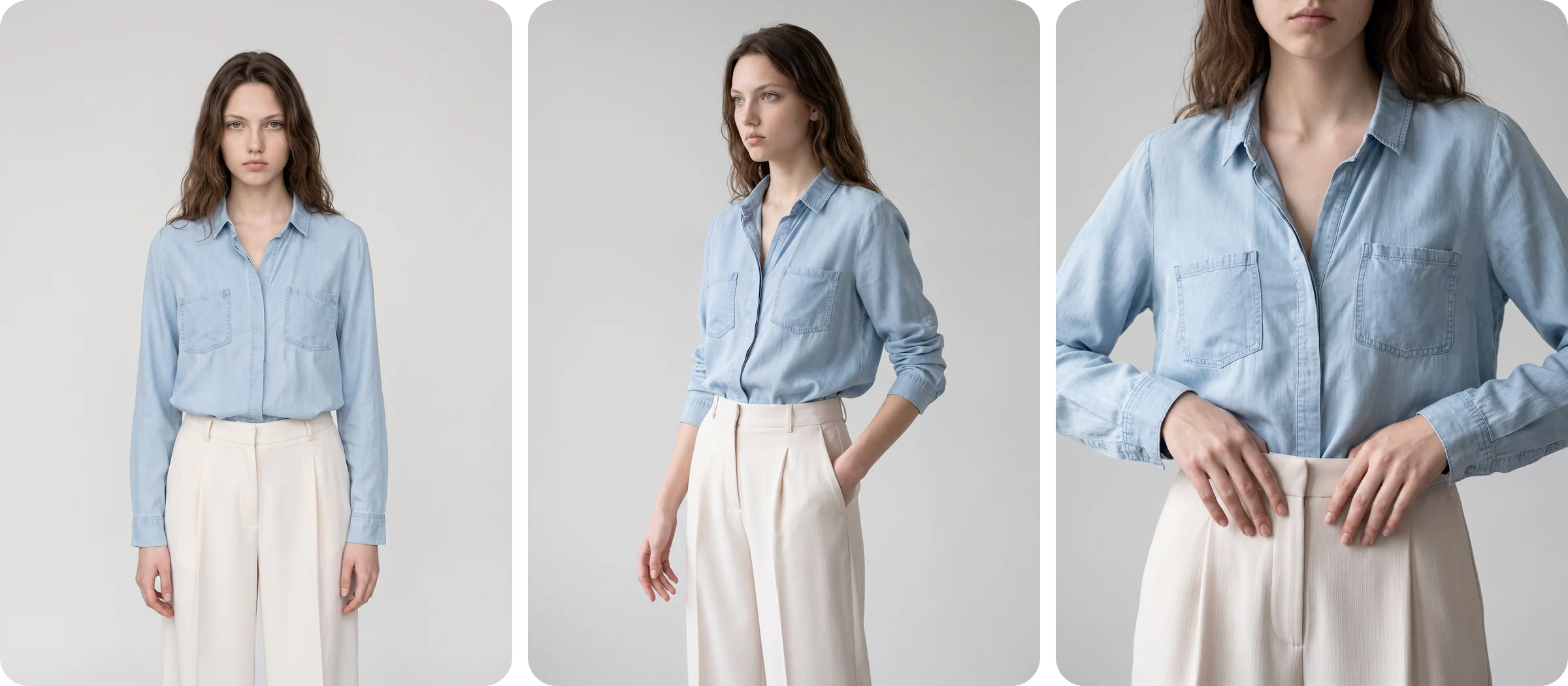
A labelling policy you can write in an afternoon
Most brands do not need a long document. They need a short one that people actually follow.
1. List where AI imagery appears. Product pages, campaigns, ads, email and social. You cannot label what you have not found.
2. Choose the wording. One sentence, in plain language, used consistently.
3. Decide placement. Next to the image on product pages, in the creative itself for ads.
4. Keep the metadata. Ask your image provider whether exports carry the source tag, and check that your hosting and compression keep it.
5. Never present a generated person as real. No customer quotes, reviewer faces or influencer roles for synthetic models.
6. Keep a record. For each batch: the source photo, the date and who approved it.
7. Review by market. What you do for New York or the EU may be more than you need elsewhere, but a single standard is simpler to run.
What Botika does, and what stays with you
Botika's gallery models are generated, not copies of real people, and every image starts from your own garment photo. That gives you a clean answer on the product and on likeness: nothing about the garment is invented, and there is no real person whose rights need chasing.
When a brand wants a face of its own, a custom model is licensed to that brand alone. When it wants to work from real talent, a private digital twin requires release forms signed by the brand and the model.
On managed accounts, Botika Creative Ops reviews and retouches images before delivery. The decision about labels and where to publish them stays with the brand, because it depends on your markets, your channels and your counsel.
Where this is heading
Expect more rules, not fewer, and expect them to converge on a simple idea: if people could be misled about what they are seeing, tell them. Brands that set a clear standard now will not have to rebuild it market by market later.
Brands thinking about casting should also read our guide to AI models and fashion diversity. To see what honest, accurate AI imagery looks like for your own products, start with a free trial and review the output at full size.
Common questions about authenticity and disclosure
Do I have to label AI-generated fashion images?
It depends on where you sell and where you advertise. The EU's transparency duties apply from 2 August 2026, and New York requires disclosure of synthetic performers in advertisements. Even where it is not required, a clear label is the simplest way to stay honest.
Is an AI fashion model a deepfake?
Not automatically. The EU defines a deepfake around content that resembles existing people, objects, places or events and would falsely appear authentic. Whether a wholly synthetic model falls inside that is a legal question, which is one reason many brands label anyway.
Where should the label go?
Close to the image, in a size and contrast people can read, with the same wording everywhere. A label people cannot find is not a label.
Should I keep image metadata?
Yes. Google Merchant Center asks that AI-generated product images keep their embedded source tag, so check that your export, compression and hosting steps do not strip it.
Can I show an AI model as a customer or reviewer?
No. Presenting a generated person as a real customer, reviewer or influencer is a deception issue regardless of any label.
Does labelling hurt sales?
The evidence is mixed and depends on context and wording. We summarise it in our guide to whether shoppers notice AI fashion photos.