Virtual fashion influencers vs AI model imagery

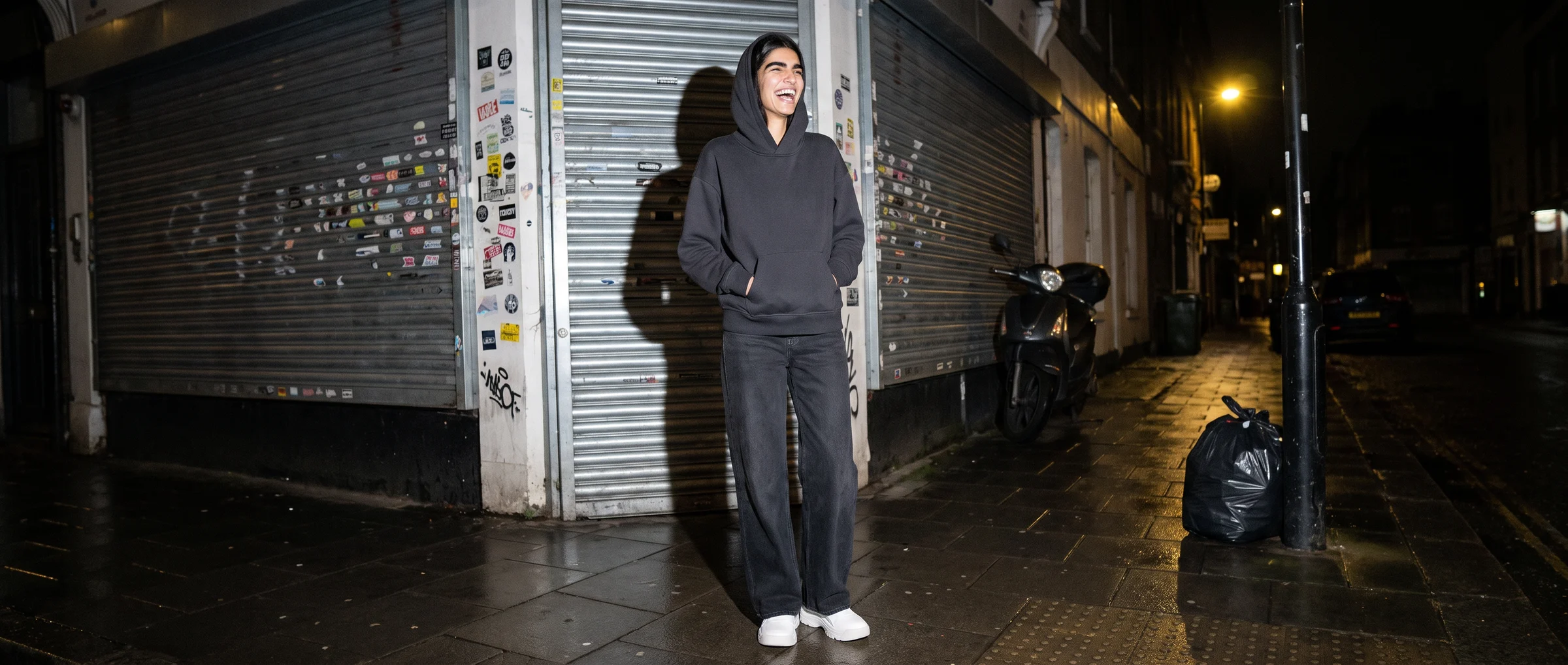
Brands now have two ways to put a digital person in front of shoppers. One is a virtual influencer: a named, consistent character with its own account, voice and followers. The other is an AI model in your product imagery: a digital person who wears your garment on a product page or in a campaign.
They get mixed up because both are "AI people", but they are built for different jobs, run by different teams and judged by different numbers.
This guide sets out what each is for, how they differ in cost, risk and results, and how to choose between them, or use both.
Two different ideas
A virtual fashion influencer is a character. It has a name, a personality, a feed and a following. The brand, or a studio, runs it like a media property, posting, replying and partnering with other brands. Its value is attention and audience.
An AI fashion model is a tool for imagery. It has no feed, no personality and no followers. It exists to show a garment clearly, in a scene you pick, on a consistent body and face. Its value is accurate, scalable product visuals. Our guide to how AI fashion models work explains the process.
The simplest way to tell them apart is to ask who the audience is. A virtual influencer has followers who choose to watch it. An AI model has shoppers who happen to see it while they decide whether to buy a garment.
What each one is good at
Virtual influencers are good at building a world around a brand. A well-run character can carry a story over months, front a collaboration and create shareable moments. If your goal is attention, community or a distinctive voice, a character can do things a product image cannot.
AI models are good at the daily work of selling clothes. They fill product pages, the long tail and campaign banners with consistent, accurate images, quickly and cheaply. If your goal is conversion and catalogue coverage, that is the job.
Neither replaces the other. A character does not make a product page clear. A product image does not build a following.
Cost and effort
The two have very different cost shapes.
A virtual influencer is an ongoing commitment. You need a team or partner to create content, plan a calendar, manage comments and keep the character consistent. The spend is steady and the payoff builds slowly, if it comes.
AI model imagery is closer to a production cost. You produce images when you need them, and the cost scales with the number of images. Botika's customers report up to 90% lower production cost and up to 10x faster time to market, mainly because the process replaces studio shoots rather than adding a channel.
If you have a small team, the ongoing load of a character is the biggest practical difference.
Risk and trust
Both carry trust questions, in different forms.
A virtual influencer asks followers to care about someone who is not real. Some audiences enjoy the fiction. Others feel misled when a character is used to recommend products as if from personal experience. Rules on influencer disclosure still apply, and they are strict about endorsements.
An AI model in product imagery asks shoppers to trust the picture of the garment. The risk here is accuracy: colour, fit and detail. A reader who suspects an image is AI may lower their opinion of the site, even if the image is fine. Our piece on whether shoppers notice AI fashion photos reviews the research.
In both cases, plain labelling is the safest policy. See our guide to authenticity and disclosure.
How to measure each
The numbers are different, which is another sign they are different tools.
For a virtual influencer, track reach, engagement, follower growth, saves, clicks to your site and sales from tracked links. Judge it over months and compare it with what the same budget would buy in other content.
For AI model imagery, track product page conversion, add-to-cart rate, return rate, cost per live product and time to market. Judge it over weeks, with a clean test on matched products. Our guide to measuring the ROI of AI fashion models shows how.
Mixing the two sets of numbers is a common mistake. A character that gets lots of likes tells you nothing about whether your product pages convert.
How to choose
Match the tool to the goal.
- You need product pages, the long tail and campaign images covered: use AI models.
- You want an ongoing character with a voice and audience, and can staff it: consider a virtual influencer.
- You want social content that shows your products: use AI model imagery as the raw material, with real or character voices on top.
- You are not sure: start with AI model imagery. It is cheaper to try, it shows results in weeks and it produces the images a character would need anyway.
Many brands end up with a mix: AI models for the catalogue, human creators for trust, and a character only where the brand story calls for one. For a view of how brands have approached this, see what happened next for brands using AI models.
A simple starting plan
If you are weighing the two, do this.
- Write the goal in one sentence. Attention, or conversion?
- Pick the metric that proves it. Reach and engagement, or conversion and returns.
- Start small. Ten products on AI models, or one month of character content.
- Review honestly. Did it move the number you chose?
If the answer is conversion, try Botika on a few styles and compare the pages against your current ones. If it is attention, plan the character as a media project, not a photo shoot.
Common questions about virtual influencers and AI models
What is a virtual fashion influencer?
A named digital character with its own account, personality and followers, run like a media property. Its value is audience and attention.
How is an AI fashion model different?
An AI fashion model is a tool for product and campaign imagery. It has no feed or followers. It shows garments clearly on a consistent digital person.
Which is better for a fashion brand?
It depends on the goal. AI models suit product pages and catalogue coverage. A virtual influencer suits a brand that wants an ongoing character and has a team to run it.
Which costs more to run?
A virtual influencer is an ongoing commitment with steady content, community and consistency work. AI model imagery is a production cost that scales with the number of images you make.
Do disclosure rules apply to virtual influencers?
Yes. Endorsement and influencer disclosure rules still apply, and plain labelling that a character is not a real person is the safest policy.
Can a brand use both?
Yes. Many use AI models for the catalogue and a character only where the brand story needs one, with measurement kept separate for each.