AI models for fashion diversity: what they can and cannot do

Open the product page of almost any fashion site and you can tell who the brand imagines it is selling to. The people in the photos are the answer. When they do not look like the customer, the customer notices before they can say why.
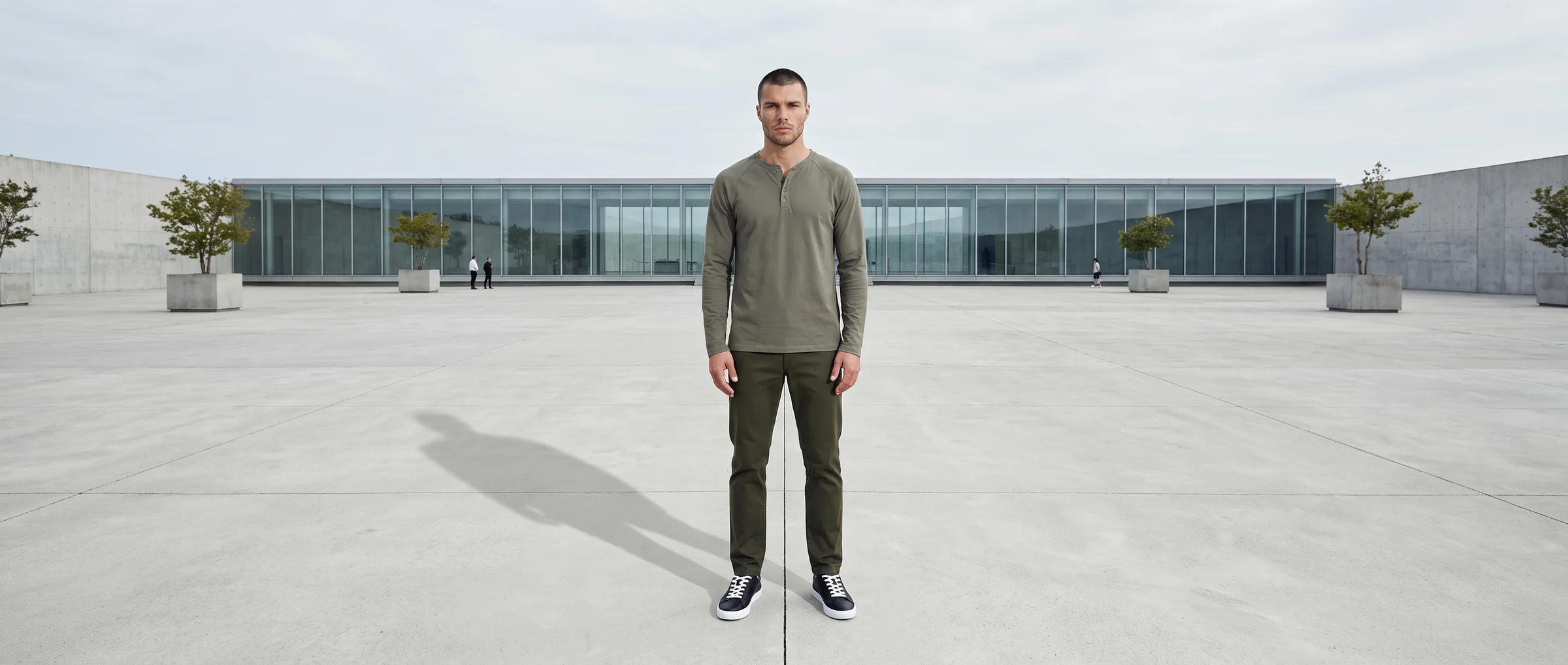
That gap is where AI models enter the conversation. They can put one garment on several people, in every market a brand sells to, without booking a shoot for each. They can also be used badly, as a shortcut that looks like inclusion without the substance.
AI models for fashion diversity are digital people, generated by software, chosen to reflect a range of skin tones, ages, body types and markets so that a brand's imagery looks like its customers. This guide covers what they do well, where they fall short and how to cast a range that holds up.
Why representation on the page changes what people buy
Shoppers use the model as a stand-in for themselves. If the model is a different size, they ask whether the garment will fit them, and online there is nobody to ask.
Researchers have measured this. A 2025 paper in the Journal of the Academy of Marketing Science found that thin models can deter shoppers who wear larger sizes from buying online, because they see a difference between their body and the model's and perceive a higher risk that the garment will not fit. Showing models whose size matches the shopper's own reduced that effect.
The same study found that size charts and free returns can hide the problem in a retailer's own data. A brand can lose a sale without ever seeing the reason.
That is the commercial case for range. It is also the visual one: a catalog that shows several people reads as a brand that knows its customers.
What AI models can do for a diverse catalog
The old constraint was cost and logistics. Casting five people for every collection, in every market, is a large production, so most brands settled for one or two faces and hoped for the best.
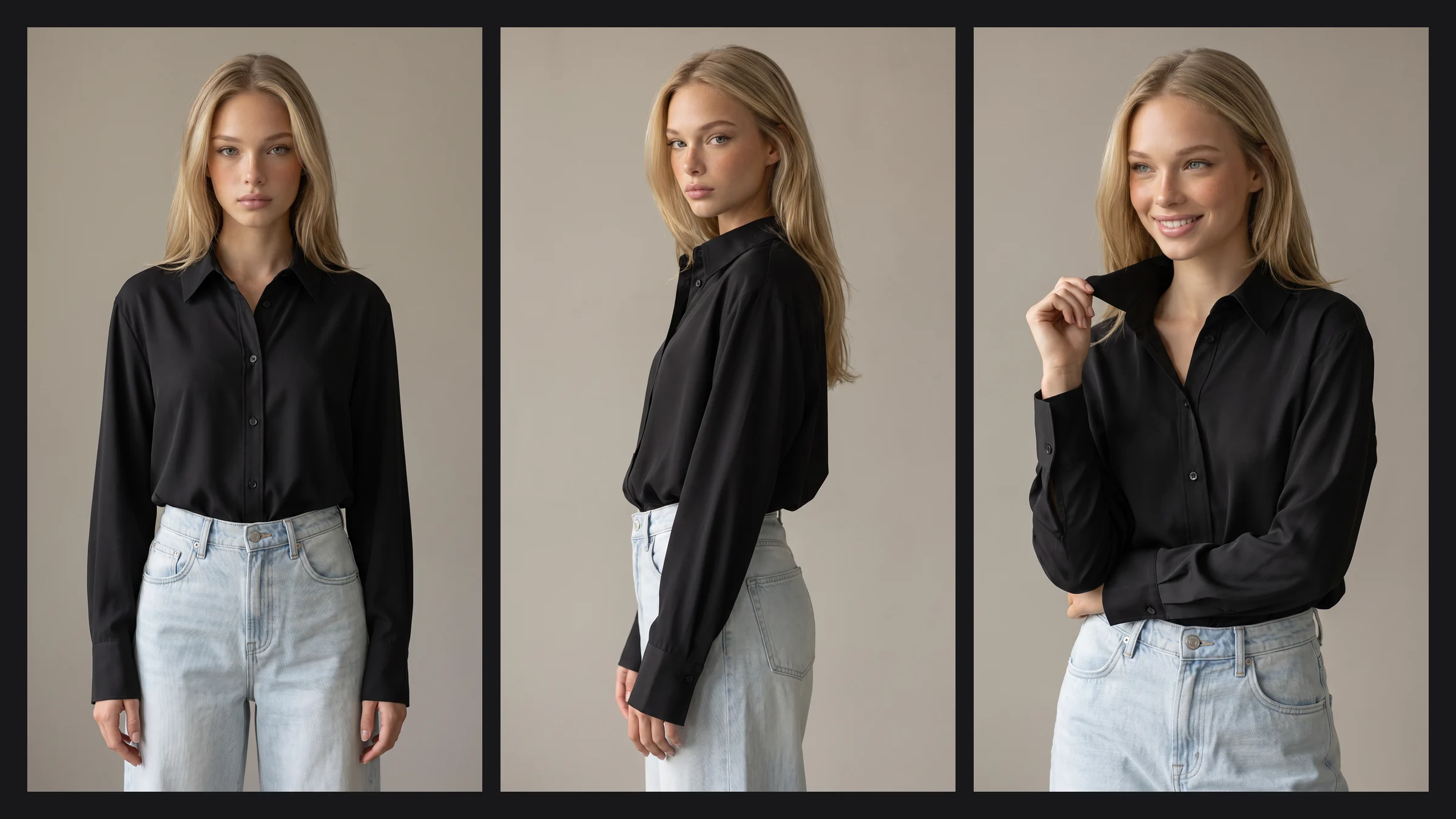
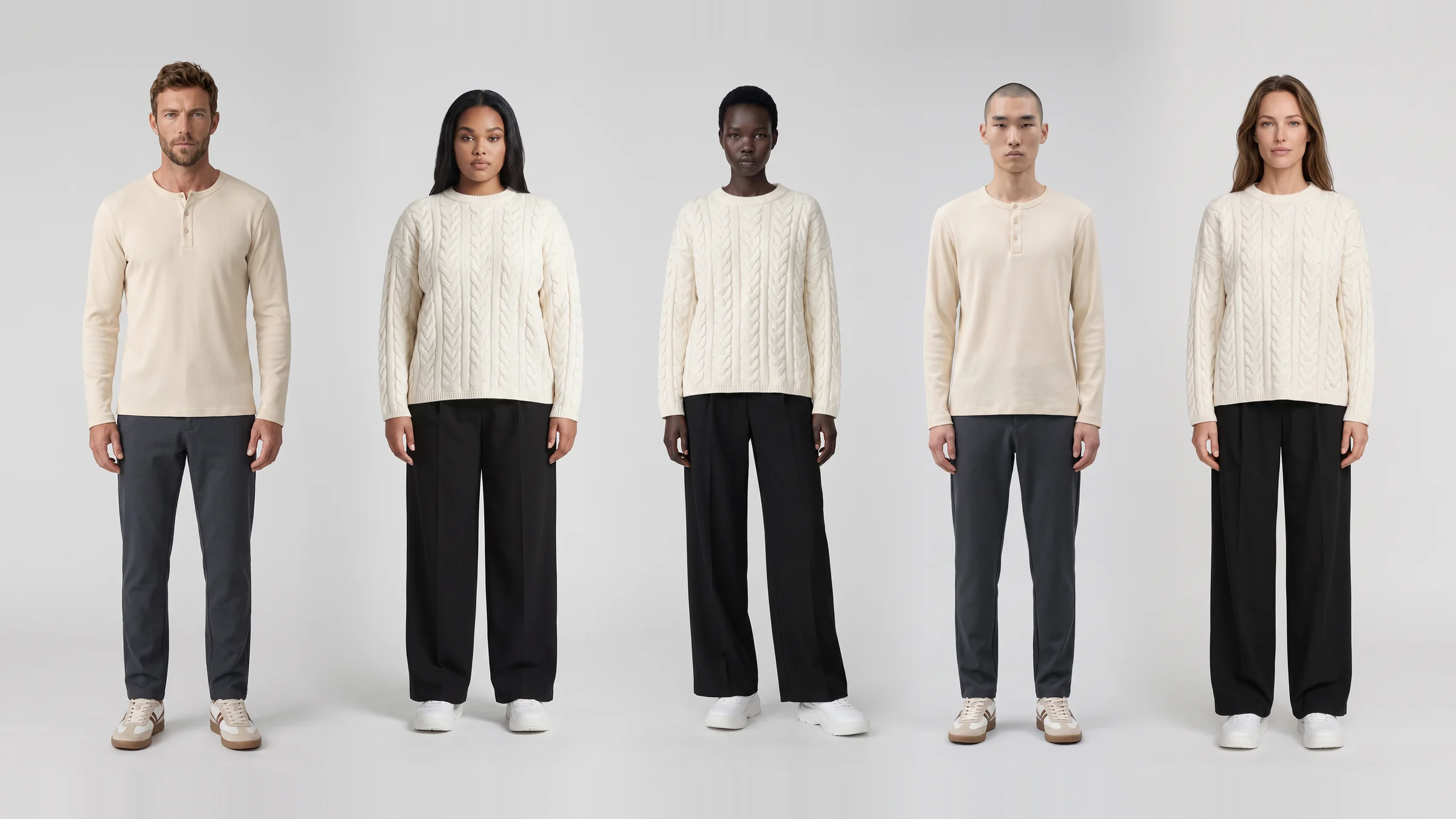
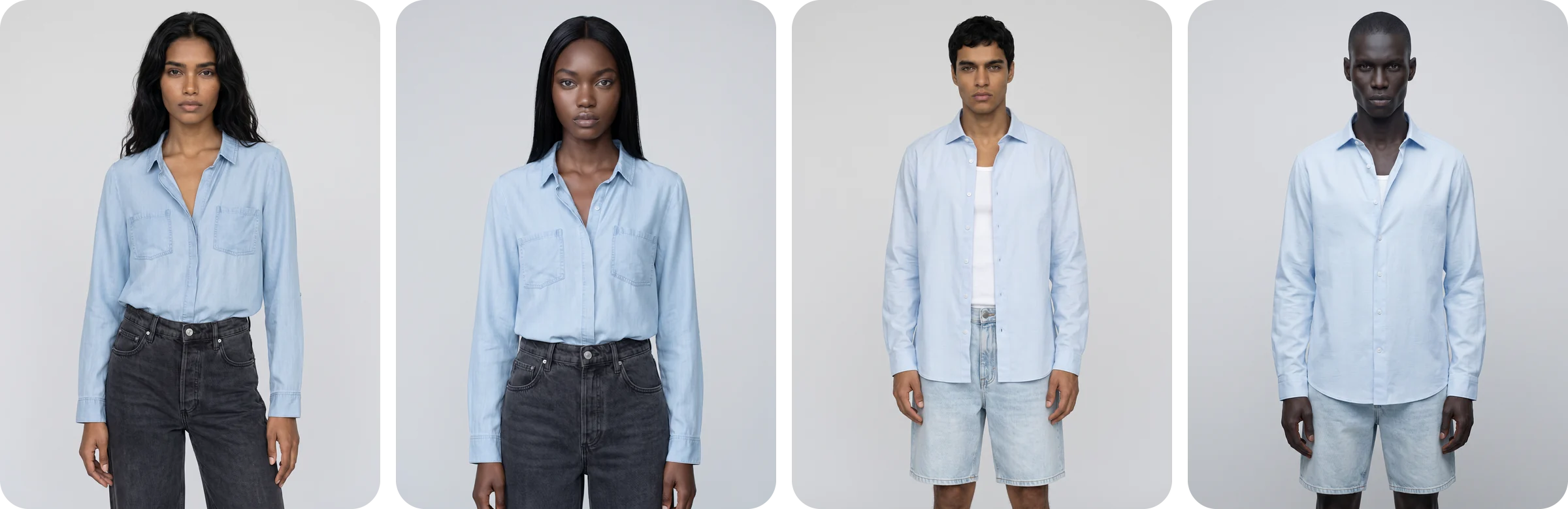
With AI models the same garment can appear on several models, in the same lighting and framing, from a single product photo. Botika's model gallery has more than 150 models, and brands choose by body type, skin tone and market. Three things follow:
1. Range on your best sellers. You can show your highest-traffic products on several people, not only the hero looks.
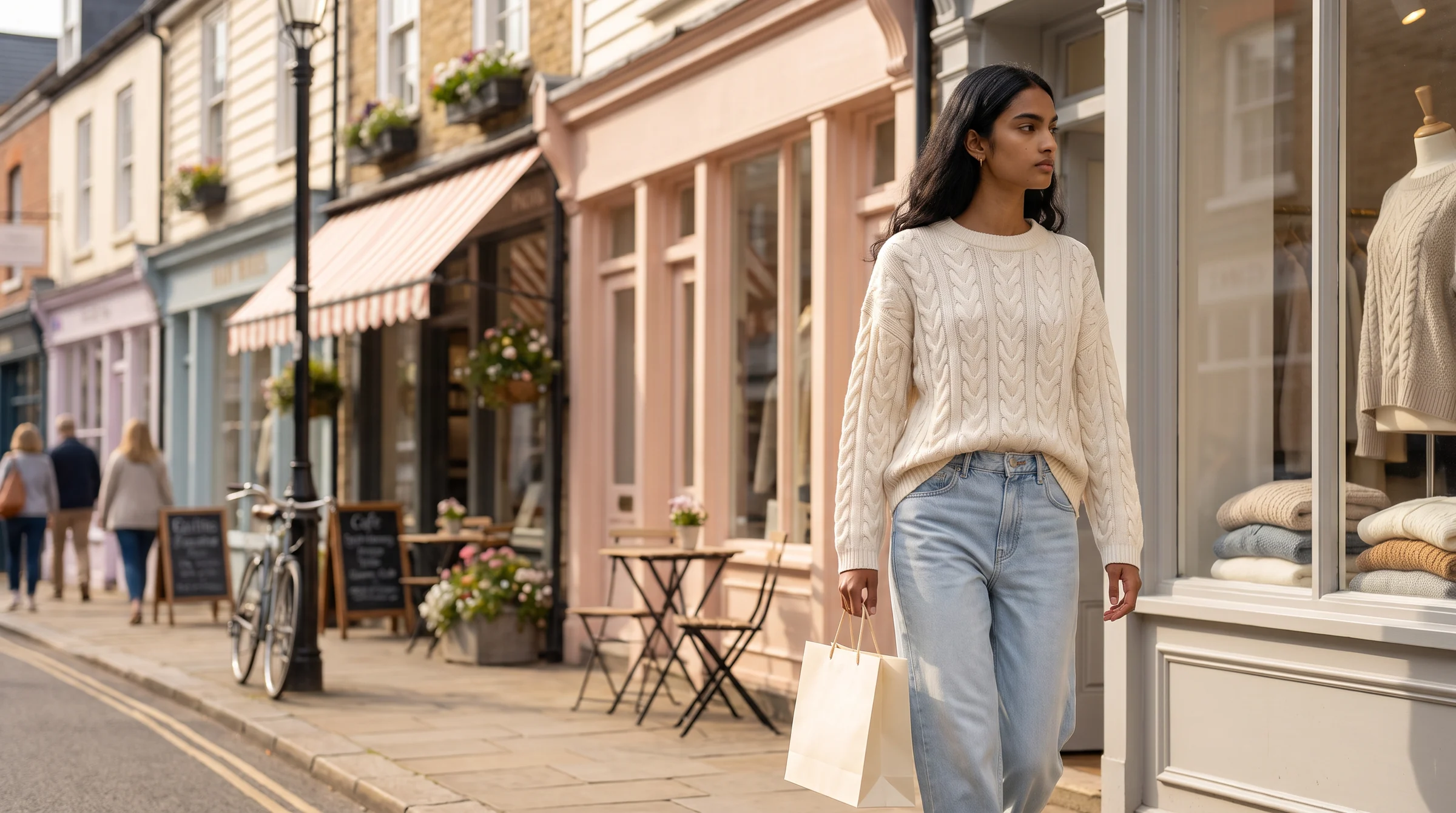
2. Local casting. A brand selling in several regions can show customers in each one someone who looks like them, from the same source photos.
3. Consistency. Every model is lit and framed the same way, so a range of faces reads as one brand rather than a collage of shoots.
What they cannot do
A fair guide says this part plainly, because a brand that overstates it pays for it later.
They do not replace hiring. When Levi's announced in 2023 that it would test AI models to show more body types, sizes, skin tones and ages, the criticism was immediate: the same money could pay a more diverse group of real models. The brand responded that AI would supplement, not replace, shoots, and that it would keep diversifying its human casting. That is the right order of operations.
They do not show fit. An image shows how a garment looks on one body. Showing fit across body shapes is something we are still building, so size charts stay on the page.
The range is wide, not endless. Gallery models skew younger, and every model has a set hairstyle and a limited range of expressions. If a customer group you serve is not represented, look at the gallery early and ask about a custom model.
They cannot manufacture authenticity. A brand that uses AI models to look inclusive while its own team, campaigns and sizing are not will be read as hypocritical. Research on disclosed AI models in body-positive advertising found exactly that reaction. We cover it in our guide to whether shoppers notice AI fashion photos.
How to cast a range that holds up
Start from your customers, not from the gallery. The model is only useful if it answers a question your shoppers actually have.
1. Read your own data. Look at which sizes sell, which markets are growing and where returns cluster. The imagery should answer the gaps.
2. Decide the range per category. Knitwear, tailoring and swimwear raise different fit questions. Cast for each, not for the brand in general.
3. Show the same garment on more than one model. On your top sellers, two or three models do more than ten different products on one.
4. Check skin and hair at full size. Look at how fabrics sit against different skin tones, how light colours read and whether hair texture looks natural.
5. Avoid one-slot casting. If models from some backgrounds only ever appear in one category, such as swimwear or sportswear, the range is a label, not a catalog.
6. Keep real people in the plan. Campaigns, community work and your own team are part of the same story. Say what you do rather than implying more.

Custom models for brands that need a face of their own
Some brands need a model nobody else uses, either because exclusivity matters or because their customer is not in the standard range. A custom model is built for one brand and licensed to it annually, exclusive to that brand while the license is active.
A brand's own real model can also be brought in as a private digital twin. The brand and the model sign release forms first, so the person behind the likeness has agreed to how it is used.
Both routes sit beside the gallery. Most brands start with gallery models, learn what their customers respond to and then decide whether a custom model is worth it.
Measuring whether it worked
Decide the measures before the images go live. Return rate by size is the most revealing, because it is where the fit worry shows up. Conversion by market shows whether local casting is landing.
Compare like with like: the same products, over the same weeks, with and without the added range. Give the test long enough for returns to come in, not only clicks.
If you want the broader case for AI imagery in an inclusive catalog, our increase diversity page sets out how the gallery fits a brand's range.
Where this is heading
The next step for AI models and diversity is better evidence. Brands that publish range and then measure returns and conversion will learn faster than those that treat it as a one-off project.
If you want to see how your own garments look on a wider range, you can start with the on-model product and a free trial, then judge the output at full size.
Common questions about AI models and fashion diversity
Can AI models make a fashion brand more diverse?
They can make a catalog look more representative, by showing garments on a wider range of people. They do not make the brand more diverse on their own. Hiring, casting and campaigns still matter.
Are AI models a substitute for diverse human models?
No. They are a tool for product imagery at volume. Brands that use them well keep working with real models and say so.
Does Botika offer different body types and skin tones?
Yes. The gallery has more than 150 models and brands choose by body type, skin tone and market. The range is wide but finite, so check it against your own customers early.
Will the images show how a garment fits different bodies?
Not yet. An image shows how a garment looks on one body. Fit across body shapes is in development, so keep size charts and measurements on the product page.
Can I use a model that no other brand uses?
Yes, with a custom model, licensed to your brand and exclusive to it while the license is active. Gallery models are available to all brands on the platform.
Should I tell customers my models are AI?
Often you should, and in some places you may need to. Our guide to authenticity and disclosure covers current rules and wording.