Alternatives to AI fashion photography services

AI is not the right answer for every catalog. A brand with twelve hero pieces a year, a very particular cast, or a product that depends on how real fabric moves may do better with a different route. Knowing the alternatives is how you pick the right one.
The good news is that none of the older methods has gone away, and several of them work well together. Studio shoots, ghost mannequin photography, flat lays and hanger shots each solve a specific problem at a specific cost in time and effort.
The alternatives to AI fashion photography services are the established ways of producing product images without generative tools: a studio shoot with real models, ghost mannequin photography, flat lays, hanger photography, and a hybrid that mixes them.
This guide sets out what each option does best, where it struggles, and how to choose by catalog size, category and sales channel.
Start with the job each image has to do
Before comparing methods, decide what the image is for. A hero image on a homepage, a grid thumbnail on a category page and a marketplace listing all have different needs.
Shoppers want to see fit and drape, and they want it accurate. The listing itself has rules too: Google Merchant Center requires at least 500 by 500 pixels, recommends 1500 by 1500 or larger, and does not allow watermarks or promotional overlays on product images. Whatever method you pick has to meet them.
The five alternatives, and what each does best
Option one: a studio shoot with real models
The benchmark for emotion, movement and presence. A real model brings expression, a real photographer brings judgement, and the result can carry a campaign.
It also takes the most coordination: casting, a studio, a stylist, hair and makeup, shipped samples and a retouching queue. It suits hero imagery, flagship collections and brands whose identity is tied to specific people.
Its weakness is the long tail. Every new colorway, late-arriving style or extra market means another booking.
The same method can be run two ways. Outsourced to a studio or agency, you pay for expertise and coordination. In-house, you buy equipment and spend your own time. Either way the method decides the look, and the arrangement decides the effort.
Best for: hero imagery, flagship collections and brands built around people. Watch out for: scheduling, licensing terms for usage and territory, and the cost of reshoots.
Option two: ghost mannequin photography
The garment is photographed on a form, then the form is removed so the clothing holds its shape with no body visible. The classic method photographs the garment on a mannequin, photographs the inside of the garment separately, and merges the two in editing.
It keeps seams, collars and labels exact and gives a consistent look across a range, which makes it a long-standing choice for shirts, jackets and knitwear. It takes skilled retouching, and it shows shape rather than how a garment moves on a person.
Best for: shirts, jackets, knitwear and anything defined by its construction. Watch out for: the retouching queue, which grows with every colorway.
Our guides to ghost mannequin tips and photographing clothing on a mannequin go through the setup.

Option three: flat lays
The garment is styled flat and photographed from above. It is the lowest-effort method, needs no model, and is a good fit for graphic tees, knitwear, denim, accessories and anything where the print or texture is the story.
The craft is in the details. Shotkit recommends shooting directly overhead on a tripod, lighting with indirect window light or an off-camera flash at 45 degrees, and choosing a background that complements the clothing. Steaming and shaping the garment matter as much as the camera.
The limit is fit. A flat lay cannot show how a garment sits at the shoulder or falls from the waist, which matters most for tailored pieces.
Best for: graphics, accessories, textures and quick launches. Watch out for: garments that look lifeless without shaping, and the absence of any fit information.
Option four: hanger and rail photography
A steamed garment on a hanger against a plain wall is the fastest way to get a clean image of every product. It suits high-volume ranges, clearance feeds and marketplaces that mainly need a clear record of the item.
It is honest and quick, but the garment hangs loosely and hides its real shape, so it works best as a supporting image rather than the lead.
Best for: large ranges, clearance feeds and marketplaces. Watch out for: creases and an uneven hang, which show immediately against a plain wall.

Option five: a hybrid
Most brands that grow end up here: shoot the heroes with real people, then cover the rest of the range more efficiently. The simple photos from the options above become the raw material for everything else.
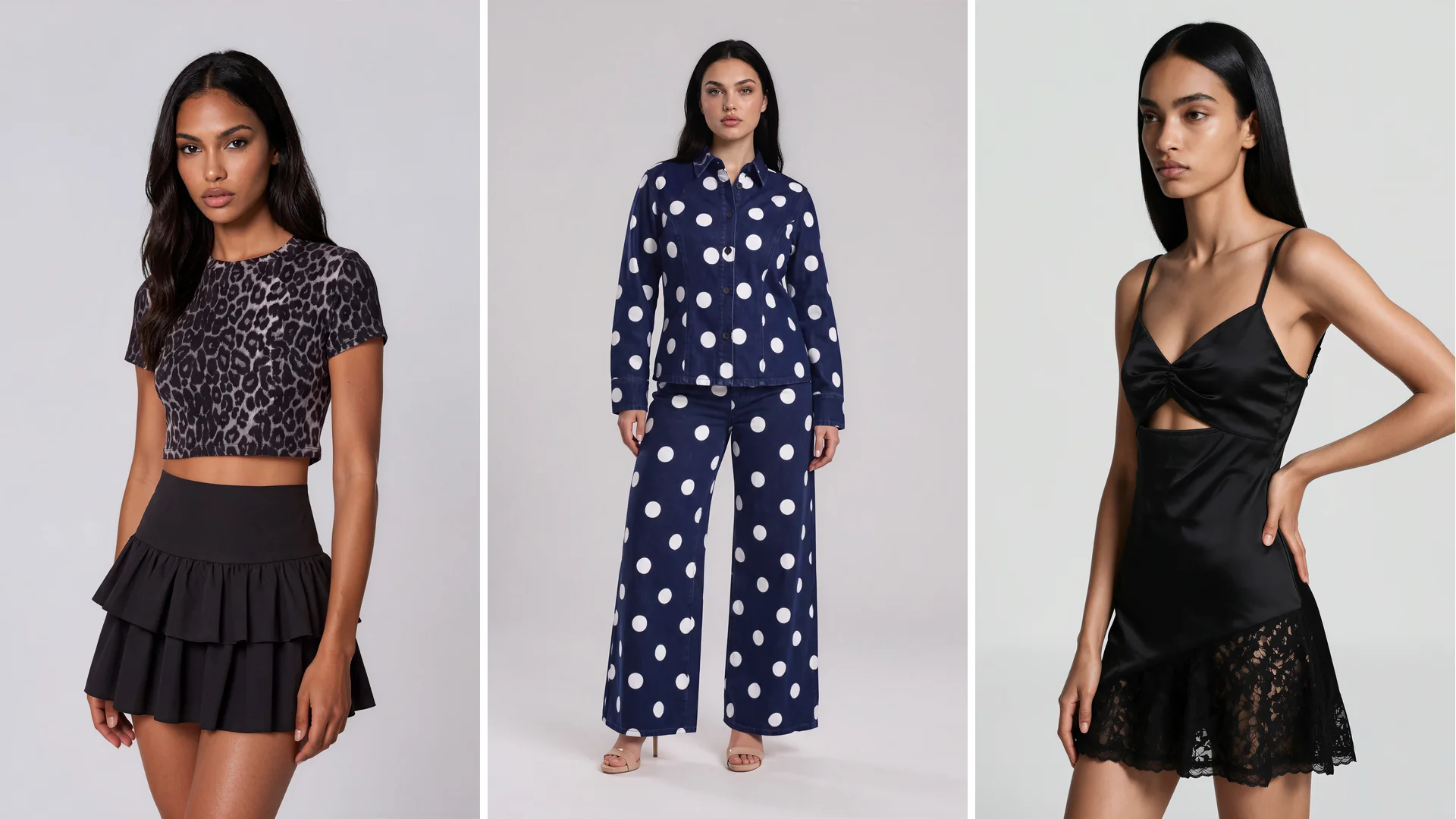
That is where a platform like Botika fits. It works from flat lays, ghost mannequin shots and existing on-model photos, including cropped and headless ones, and turns them into on-model images with AI models you choose. The alternatives in this guide are also the best inputs to it.
A hybrid works best with a written rule. Decide which products get a real shoot, which get on-model images made from photos, and which are covered by a flat lay or hanger shot. Without it, the catalog drifts into a patchwork of styles.

How to choose between them
Seven questions narrow the field quickly. Answer them for each product group, not for the brand as a whole.
1. How many products and colorways launch each season?
Small ranges suit studio work. Large or fast-moving ranges need a method that scales without a booking for each launch.
2. Does fit and drape sell the product?
Tailoring, dresses and technical pieces benefit from a body in the image. Basics and graphics rarely need one.
3. How consistent must the look be?
The same model, light and framing across a range build recognition. Mixed methods need a style guide to hold together.
4. What do your channels require?
Marketplaces and shopping feeds have size, background and overlay rules. Check them before you commit.
5. How fast must products go live?
If late-arriving stock is common, the method with the shortest path from sample to image wins.
6. Who reviews the images?
Every method needs a review step. Decide who checks accuracy and who signs off.
7. What belongs in the hero budget?
Spend on real people where emotion drives the sale, and use faster methods where clarity does.
If most of your answers point to volume, speed and consistency, an on-model platform is worth testing. If they point to people, place and story, shoot. Most catalogs have some of each.
Running a fair comparison
Pick ten products that cover your hardest cases and put them through two methods with the same brief. Review the results at full size, next to the real garments.
Score what a shopper notices first: accuracy, realism and consistency. Then score speed and effort. Our guide to evaluating an AI product imagery tool sets out the same test in more detail.
If you want to see where AI sits among the choices, read our comparison of agencies versus platforms and our guide to the AI model photoshoot.
Common questions about alternatives to AI fashion photography
What are the main alternatives to AI fashion photography services?
Studio shoots with real models, ghost mannequin photography, flat lays, hanger photography, and hybrids that combine them. Each trades cost, speed, control and realism differently.
Is ghost mannequin photography still worth it?
Yes, for products where exact seams, collars and construction matter. It takes skilled retouching, and it shows shape rather than movement, so it pairs well with on-model images.
When should a brand hire real models?
For flagship campaigns, brand films and any imagery built around a specific person or movement. A repeatable catalog can often be produced another way.
Can I use flat lays as the main product image?
For graphics, knitwear and accessories, yes. For tailored pieces and dresses, shoppers usually want to see how the garment sits on a body.
Can these alternatives work together with AI?
Yes. A clean flat lay or ghost mannequin shot is the ideal input for on-model AI images, so the older methods are the starting point rather than a competitor.
How do I choose the right method?
Match it to the job: how many products you launch, whether fit sells the product, what your channels require, and how fast you need pages live. Test two methods on ten real products before you decide.
Where this is heading
The question is moving from which method is best to which method fits each product. Brands that mix studio, ghost mannequin, flat lay and AI deliberately tend to cover a whole range at a consistent standard.
See the model gallery, read how ghost mannequin shots become on-model photos, or start with a free trial.