How to brief inclusive imagery with AI fashion models

Most brands say they want inclusive imagery. Far fewer write down what that means for a shoot, a catalogue or a campaign. The result is familiar: a few varied faces at the top of the homepage and a product grid that looks the way it always did.
AI makes this easier to fix, because changing who wears a garment no longer needs a new shoot. It also makes it easier to get wrong, because a cast can be generated quickly without anyone asking whether it reflects the customer.
This guide is a practical way to brief inclusive imagery with AI fashion models. It gives you the decisions to make, the checks to run and the limits to know about, so the brief survives contact with a real catalogue.
Start with the customer, not the cast
An inclusive brief begins with who buys from you and who you want to buy from you. Look at your orders by market, your returns by size and your audience by age.
That tells you which people your imagery should show, and which are missing. It also keeps the exercise honest, because the goal is representation of a real customer base, not variety for its own sake.
What the brief should cover
Write the answers to these questions in one page, and keep it with your look guide.
- Range of age. Which ages do your customers cover, and which does your imagery show?
- Range of body and build. Which sizes and builds do you sell, and which appear on the product page?
- Skin tone and heritage. Does the cast reflect your markets, not just your head office?
- Gender expression. Which garments are worn by whom, and are you making assumptions about who they are for?
- Markets. Does a garment shown in one country look right to a shopper in another?
- Consistency. Which models will recur across a collection so shoppers learn a face?
- Limits. What can your tool do today, and what can it not?
Show the same garment on different people
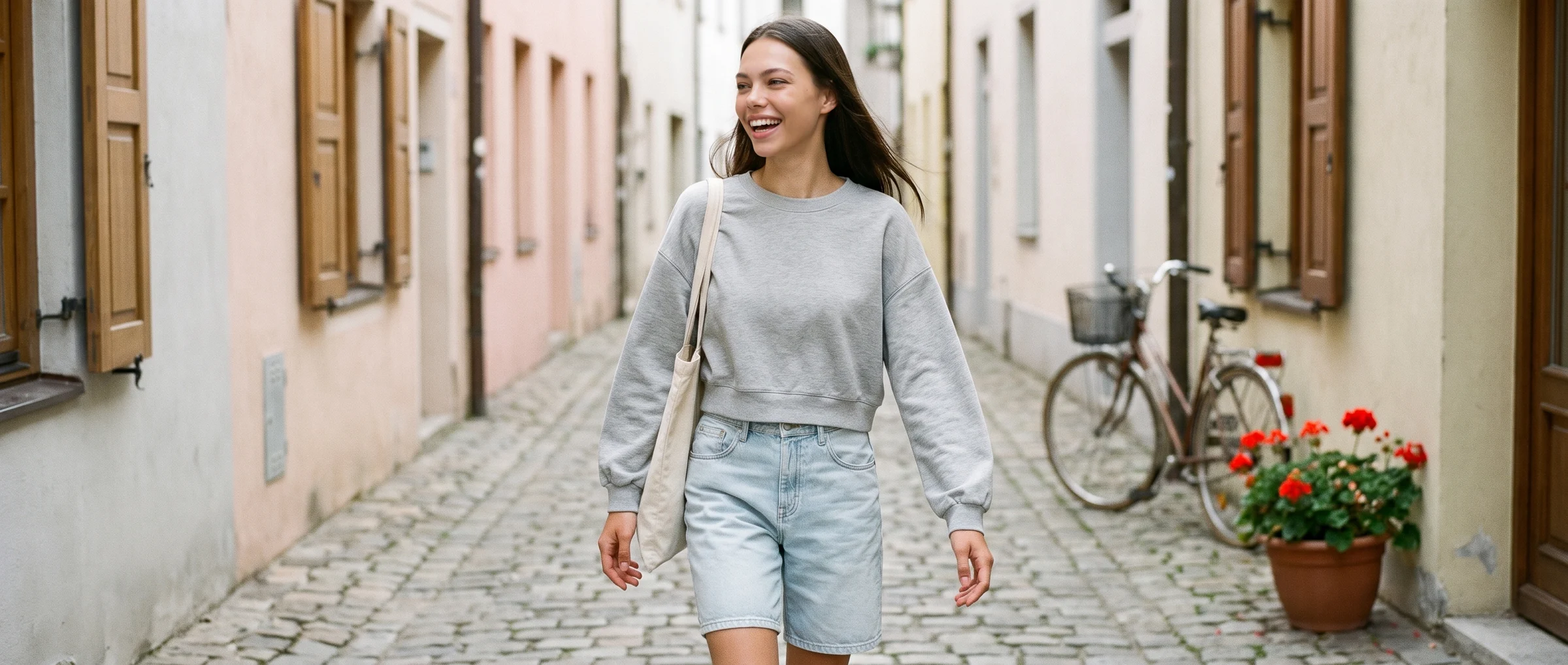
The most useful inclusive imagery shows one garment on several people. A shopper can see how the cut sits on a build near their own, and the brand avoids the impression that one body type is the default and the rest are extras.
AI makes this practical across a range. Fashion brands can hold the garment, pose and lighting constant and change the model, which also makes any differences in fit visible.
Inclusive casting has a few common traps.
Tokenism. One person from each of several groups, placed to be seen, reads as ticking boxes. Aim for a mix that looks like a real crowd.
Stereotyping. Be careful about which people are shown in which settings and roles. Check the full set, not each image alone.
A different cast on every product. Shoppers learn faces. A steady cast across a range reads as a brand, while constant change reads as stock.
Forgetting the written word. Alt text and product copy should describe people plainly and respectfully, and they matter for accessibility as well as search.
Our guide to bias and inclusive casting in AI fashion imagery shows how to check a cast for bias in an afternoon.
Check the set before you publish
Look at the whole set of images for a collection, laid out together. Ask who appears most, who appears least and who appears only in a certain kind of look.
Compare the set with your customer data. If the two do not match, change the brief, not the data. Our guide to AI models for fashion diversity and their limits goes into what AI can and cannot do here.
Know the limits of the tool
Every tool has a range. Some offer a wide gallery, some a few models. Some let you choose body type, others do not yet. Some fix hairstyles and expressions.
Ask what is on offer and what is on the way, and write it into the brief so the team does not promise what the tool cannot yet deliver. When the gallery does not cover a group of customers, a custom model made for your brand may.
How Botika supports an inclusive brief
Botika is the AI operating system for fashion content. Its gallery offers 150+ AI models across ages, builds, skin tones and markets, with around a dozen added each month, and a curated bank of poses and backgrounds that keeps the look consistent. You can browse the range on the models page.
Hairstyles and expressions are fixed for each model, and body type options are still growing, so check the gallery against your brief. For a face that belongs only to your brand, Botika can license a custom model exclusive to you while the licence is active. See also the increase diversity solution.
Where this is heading
Inclusive imagery will stop being a campaign and become a default. The brands that get there first will be the ones that wrote the brief down.
Start small. Pick one collection, write the one-page brief, show each garment on more than one person and check the whole set against your customers. Then do the next collection.
Common questions about inclusive imagery with AI fashion models
How do you create inclusive imagery with AI fashion models?
Start from your customer data, write a one-page brief covering age, build, skin tone, gender expression and markets, show the same garment on different people, keep a steady cast across a range, and check the whole set before publishing.
Can AI help achieve diversity in fashion photography?
It can make it practical, because changing the person wearing a garment no longer needs a new shoot. It does not replace the brief. The cast should reflect real customers, and the check should look at the whole set.
How do you avoid bias when choosing AI fashion models?
Compare the cast with your customer data, look at who appears most and least, and check which people appear only in certain looks or roles. Review the full set, not single images.
Can AI models represent different genders and communities?
Tools differ in range. Check the gallery against your customers, avoid assumptions about who a garment is for, and ask the vendor what it offers today and what is planned.
What are the limits of AI for inclusive marketing?
A tool can only offer the range it has. Gallery size, body type options and fixed hairstyles all matter, so write them into the brief and ask about custom models if a group is missing.
Should inclusive AI imagery be labelled?
Where rules or shopper expectations call for it, yes. Clear labelling keeps trust, and it matters most when the imagery makes claims about who the brand serves.