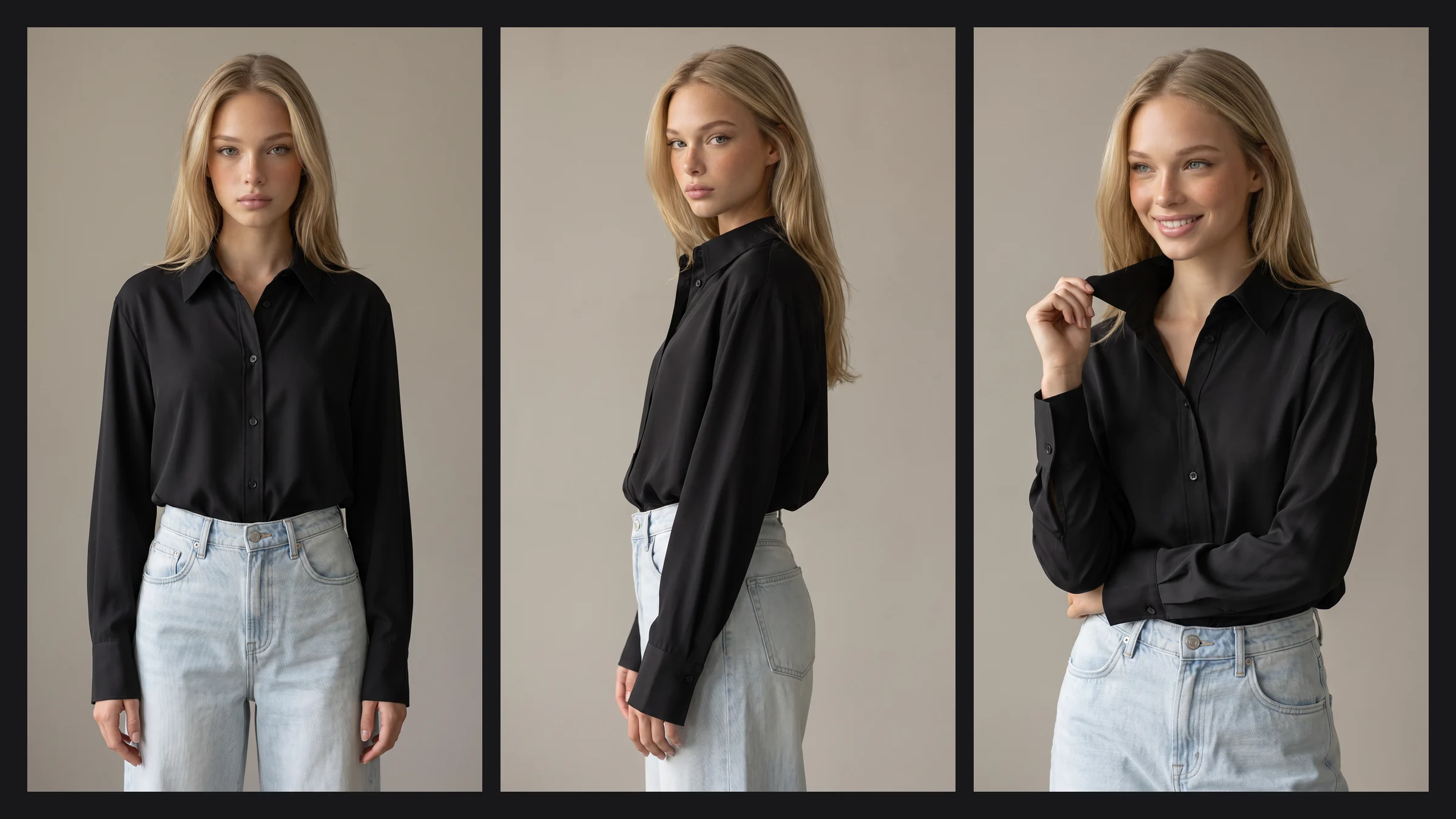
Do shoppers notice AI fashion photos?

Every brand weighing AI models for its product pages asks the same two things. Will customers notice? And if they do, will they mind?
They are different questions, and the research treats them differently. Whether shoppers notice AI fashion photos depends mostly on how good the images are and whether they are told. Whether they mind depends on what the brand says around it.
The short version: shoppers rarely react to AI imagery they cannot identify as AI, reactions can change once an image is labelled, and what people actually respond to is relevance and accuracy more than technique.
This guide goes through what has been measured, what has not, and a one-week test you can run on your own product pages.
What happens when nobody is told
The cleanest evidence comes from a 2026 usability study by Nielsen Norman Group. It recruited 77 adults in the US and showed them six versions of a fictional consulting firm's homepage, identical apart from the hero image. Three used AI-generated pictures and three used real stock photos. Nobody was told AI was involved.
The researchers expected the AI images to look worse. They did not. Ratings for trust, professionalism and authenticity were slightly higher with AI images, though only the authenticity difference was statistically significant, at about 0.4 points on a seven-point scale.
There is a useful detail in the findings. Participants who suspected an image was AI-generated tended to rate the site lower, even when the image was real. Suspicion itself carries a cost, whatever the truth.
The authors are careful about limits. It was one fictional business, six images and a ten-second look. It says nothing about fashion product pages, and nothing about what happens when an image is labelled.
What changes when the image is labelled
For fashion, the closest evidence is a study from Southern Methodist University published in the Journal of Advertising. Across three studies with more than 700 US women, researchers tested ads from a fictitious fashion brand that used AI-generated plus-size models.
When the ads said the models were AI-generated, women reported lower brand attitudes, weaker purchase intentions and less willingness to recommend the brand. The researchers attribute this to perceived hypocrisy: the brand was making a body-positive claim with models who were not real people.
A bare "AI-generated" label did not repair it. Adding a sentence explaining that the AI had been trained only on licensed photos of real people with diverse body types did, and brands that did this scored as well as brands using no AI at all.
That result is narrow. It tested body-positive advertising, a context where authenticity is the message, and it used a made-up brand. For a product page whose job is to show a garment accurately, the effect may be smaller. But it points to the lesson that matters: the reaction depends on the claim being made around the image.
What shoppers actually respond to
Strip away the technology and shoppers are asking a few simple things of a fashion photo.
1. Is this someone like me? Research in the Journal of the Academy of Marketing Science found that models whose size differs from the shopper's can deter purchase because they raise fit risk. Relevance shapes the decision before method does.
2. Is the product shown accurately? Colour, drape and detail decide whether an item comes back. An image that is obviously AI but accurate does more good than a beautiful one that misleads.
3. Does it look the same as everywhere else? Shoppers notice repeated faces and stock-feeling poses on any site, human-shot or not.
4. Does something look off? This is where AI images go wrong. Not the concept, the details.
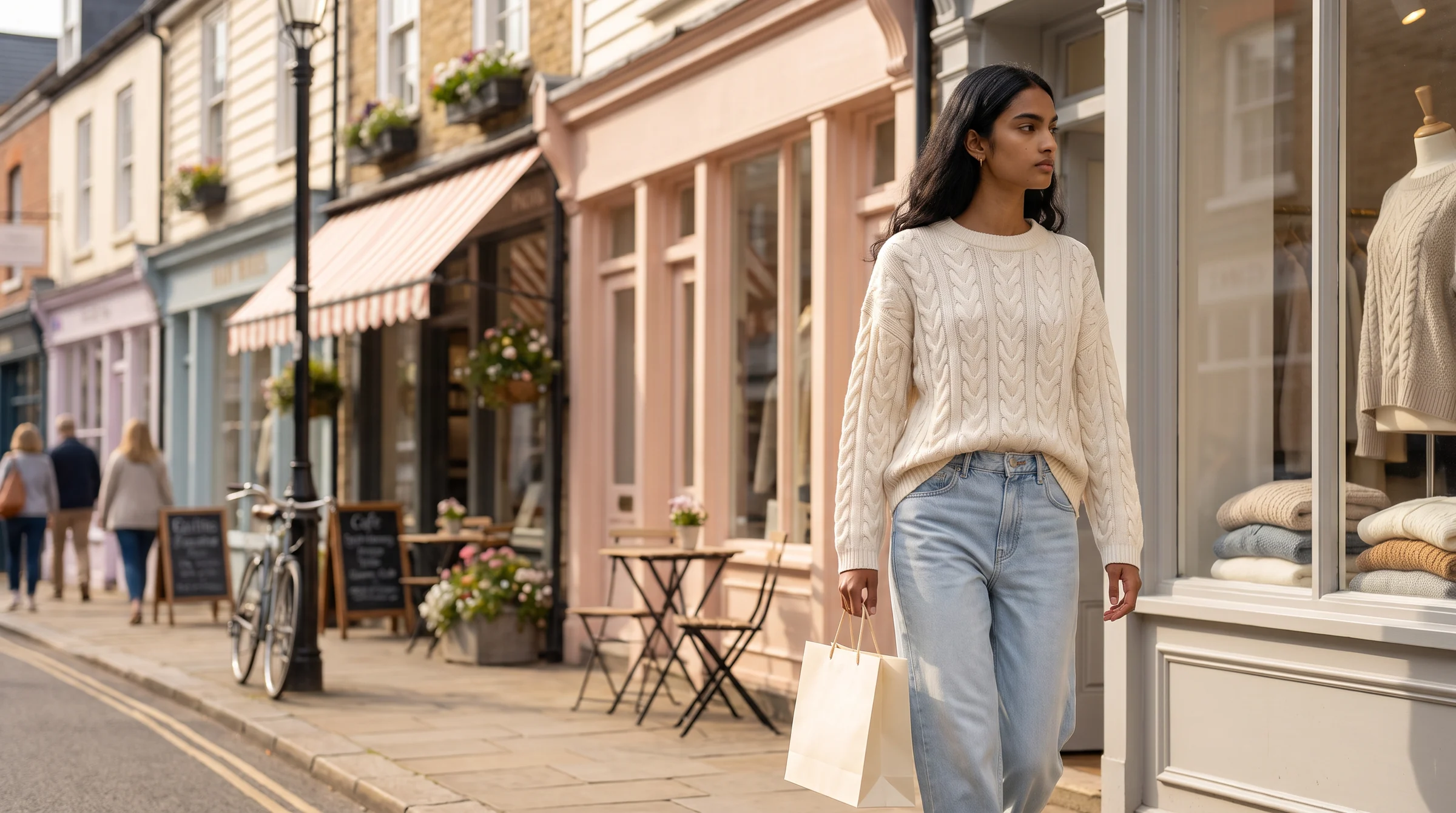
The tells people pick up on
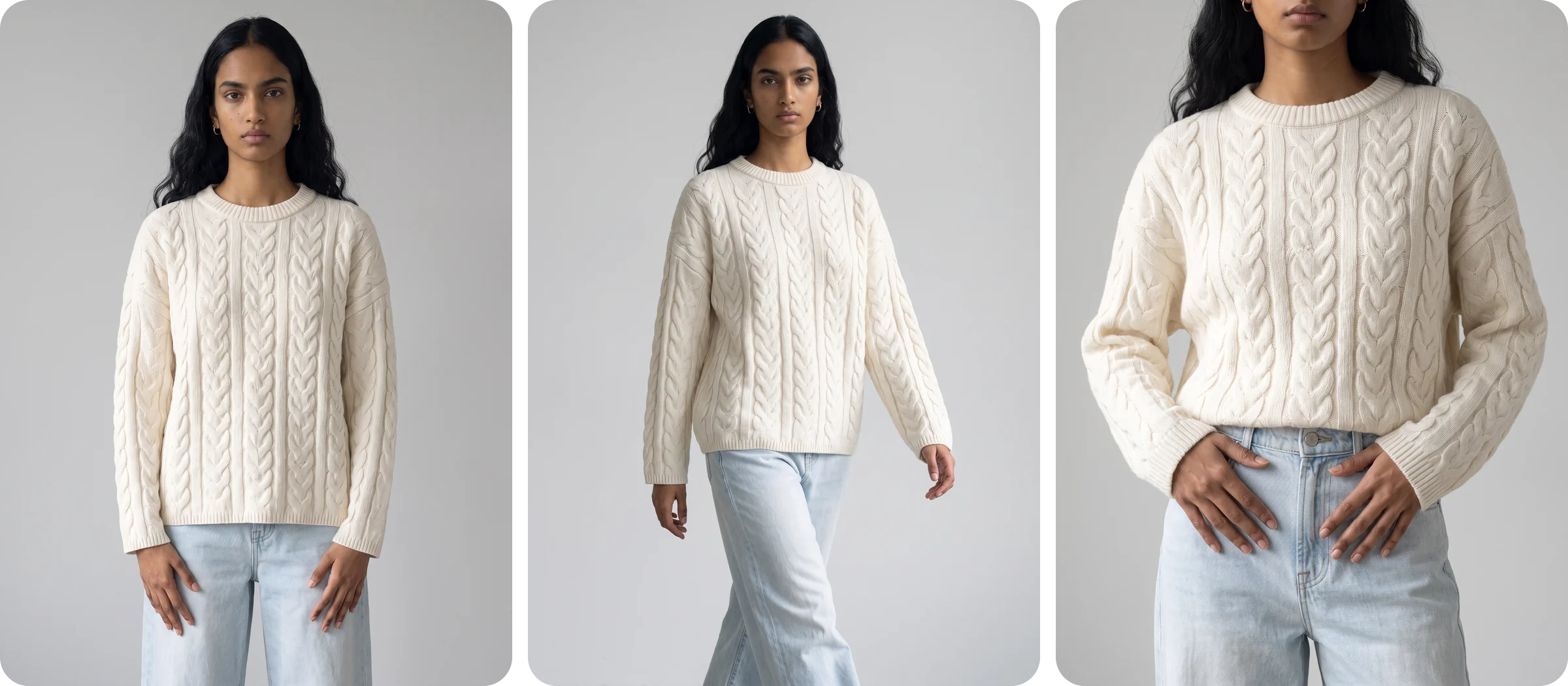
Most shoppers will not analyse an image. They will feel that something is off, and they will not be able to say why. The causes are usually small and fixable.
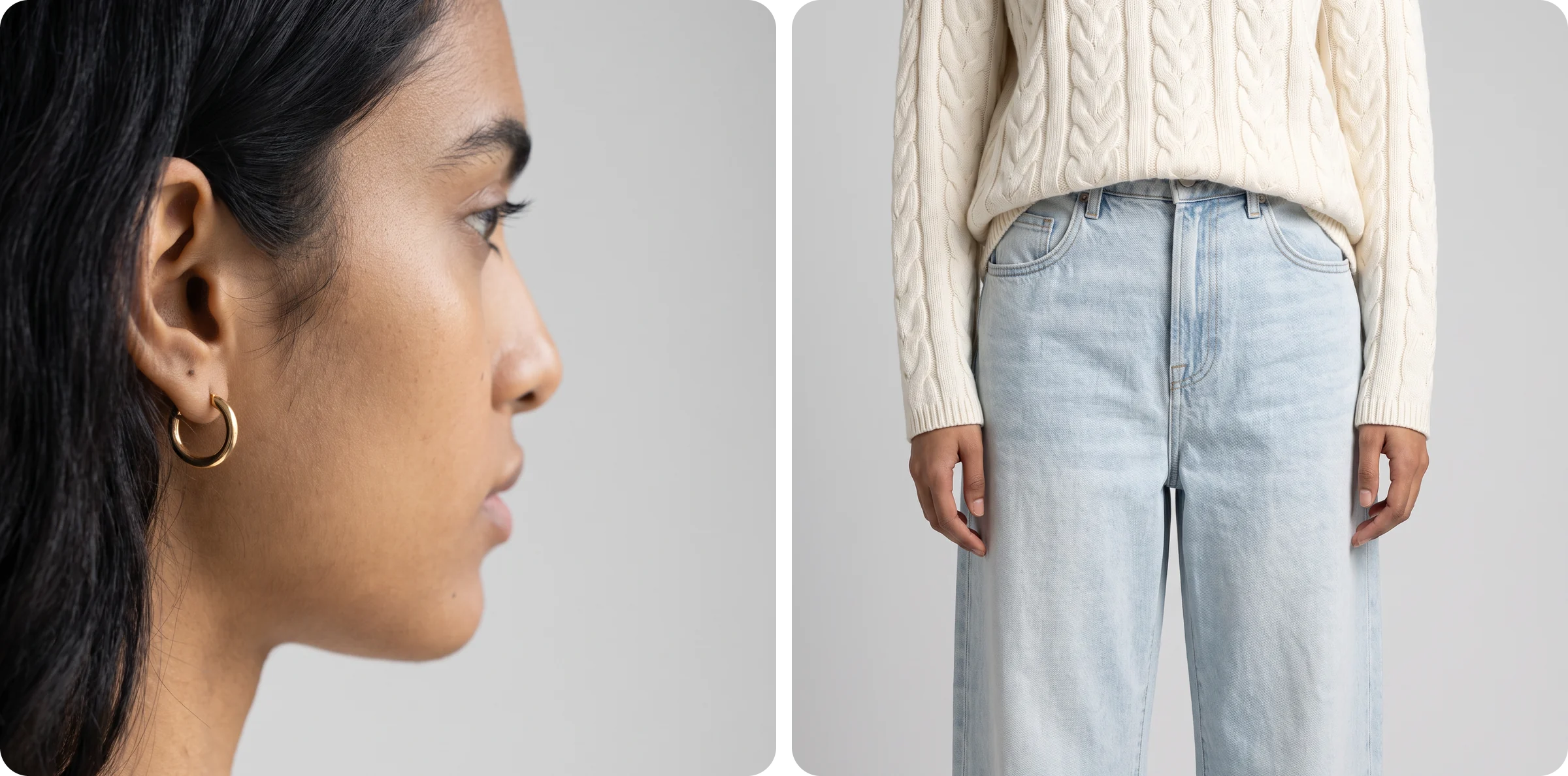
Hands and fingers. Count them. Merged or extra digits are the classic give-away.
Jewelry and small hardware. Earrings that do not match, a chain that vanishes into skin, buttons that change shape.
Hems, seams and print alignment. A stripe that breaks across a seam or a hem that fades into the leg.
Skin and hair. A too-smooth surface, hair that looks painted on, teeth that merge.
Shadows. Feet that float, light that points in two directions.
Our guide to realistic AI model creation covers how to check for each. The routine is the same every time: zoom to full size and look at the small things.
A one-week test you can run
You do not have to guess how your customers react. Product pages are one of the easiest places in a business to test.
1. Pick 20 products. Choose ones with enough traffic to measure, across two or three categories.
2. Make the images carefully. Review each at full size before it goes live. A weak test proves nothing.
3. Split the traffic. Half see your current images, half see the AI on-model set. Keep everything else the same.
4. Add a disclosure variant if you plan to label. Test the exact wording you intend to use, not a placeholder.
5. Watch four numbers. Add-to-cart rate, conversion, return rate by product and any customer messages about the images. Give returns a few weeks to arrive.
The test shows whether your customers care, on your products, in your market. That is worth more than any general study.
What this means for your product pages
Lead with accuracy. If a shopper sees what they will receive, the method matters less. Keep one model and one look consistent across a collection so the range reads as a brand rather than a mix of sources.
Keep a human-made hero where story or place carries the idea, and use AI for the volume of product imagery around it. Our comparison of AI generated models and real models shows how brands split the work.
And decide how you will talk about it before a customer asks. Our guide to authenticity and disclosure covers current rules and plain wording.
Where this is heading
Expect the debate to move from whether AI imagery is acceptable to how well it is made and how honestly it is described. The brands that do well will be the ones that measure, label clearly and keep fixing the small things.
If you want to see how your own products look, start with a free trial and run the one-week test on a few of them.
Common questions about shoppers and AI fashion photos
Can shoppers tell AI fashion photos from real ones?
Often not at a glance. In a 2026 usability study, AI hero images were rated slightly higher than stock photos when nobody was told. Visible flaws, such as hands, jewelry and hems, are what give images away.
Does labelling AI images reduce sales?
It depends on context and wording. A study of body-positive fashion ads found lower purchase intent when AI models were disclosed, and recovery when the brand explained how the AI was built. Other contexts have shown less effect, so test your own.
Do AI product photos increase returns?
Returns follow accuracy, not method. Compare return rate by product, before and after, and judge by that rather than by assumption.
Should I label AI images?
In some places you must, and in others it is good practice. See our guide to authenticity and disclosure for the current rules.
What should I check before publishing an AI model image?
Hands, matched shoes, hems and seams, print alignment, colour against the swatch and shadows under the feet, all at full size.
What if customers complain that images look fake?
Treat it as feedback on specific images, find the detail that looks off and fix it. Complaints are usually about a hand, a hem or a texture, not about the idea.