Brands in review: Celine product page images

A shopper opens a Celine swimsuit page. The front is a plain black one-piece on a flat lay. The back is where the design is, a bow, but it is black on black, so the shopper gets a dark shape on a dark shape. The bow is there, and the shopper still cannot tell where it sits or what the suit looks like on a body.
That is where this episode starts. Every Brands in Review episode takes one fashion brand, runs through its product pages and shows what works, what is missing and how AI imagery would fill the gap. This is the quick read, and the full episode is in the player above.
In short, Celine sells a world beautifully, then its product pages leave the shopper guessing about fit, length, print and sheerness.
Thirty-four seconds for a world
Celine is a French house that started in Paris in 1945 as a children's shoe shop and became one of the houses that define French chic. The campaigns are stunning.
By Similarweb estimates, Celine gets about 2.7 million visits a month. Visitors look at just under four pages and stay about two minutes eleven, which is roughly 34 seconds a page. On the fast fashion site in episode one, a page got about 26. People slow down for Celine, and they are willing to look.
Then there is the part nobody expects. The US is only 29.85% of the visits. Korea is 21.32% and Japan is 8.96%, so the two together, at 30.28%, are slightly bigger than the US.
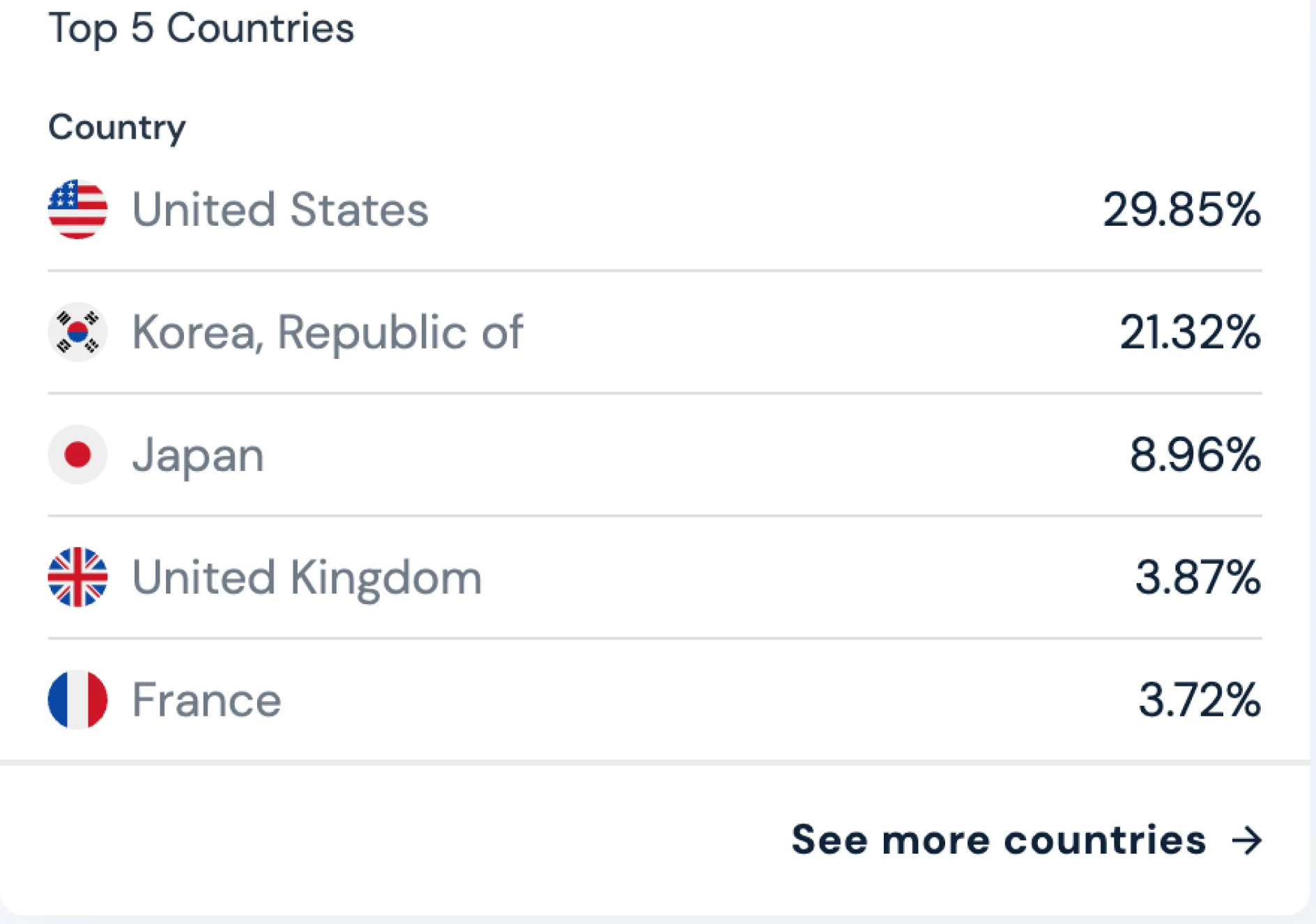
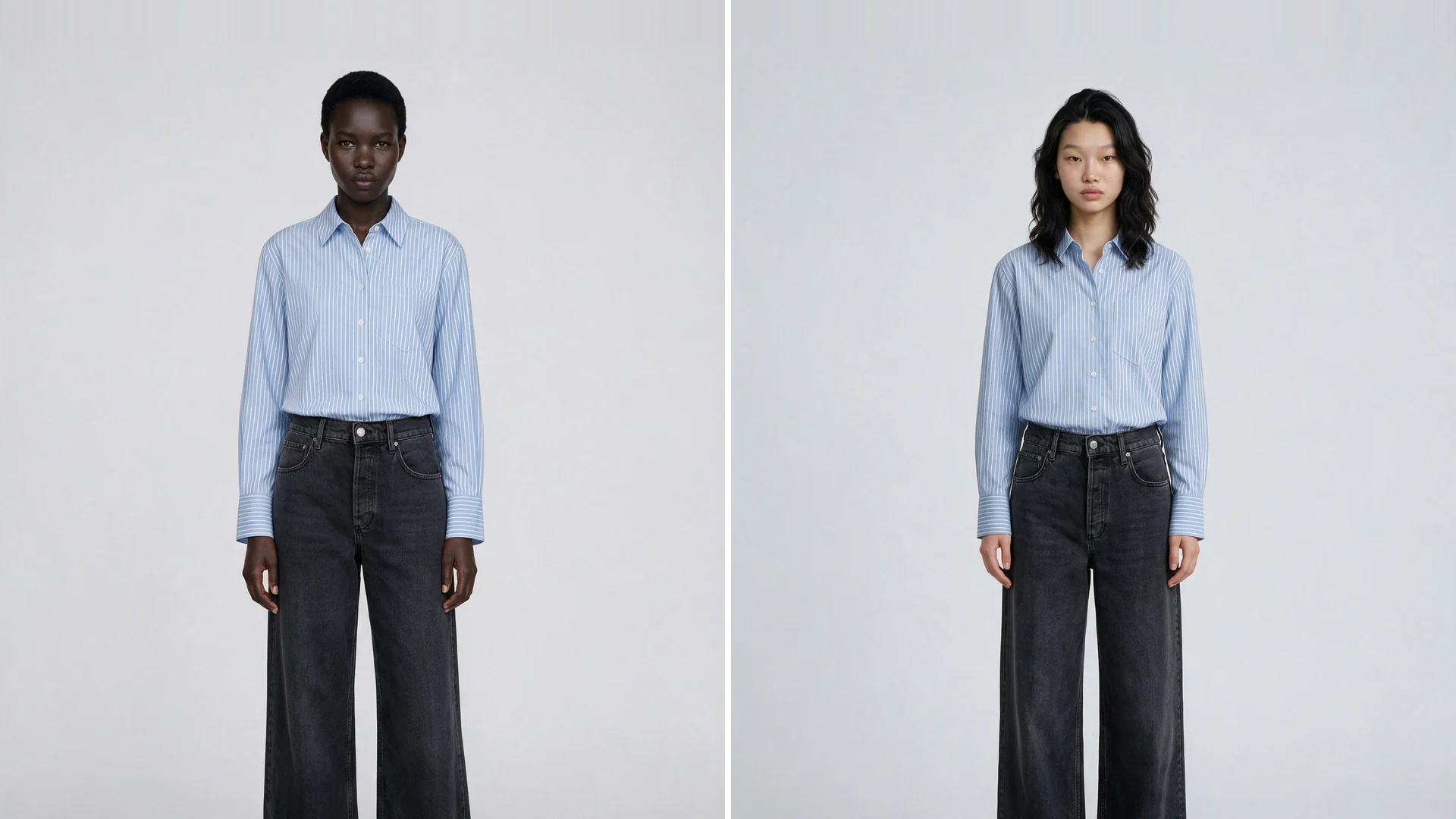
We are not going to tell a French house how to cast its campaigns. But when 30% of your shoppers are in Korea and Japan, showing the clothes on more than one kind of model is not a statement. It is just commercial.
The flat lay is not the problem
The home page is the page Celine gets right: editorial, on a model, the brand at full volume. Then you click into a product and it is a different website. The shirts and tops category is flat lays from top to bottom.
Leading with a flat lay is a luxury habit, and it works, because the product on its own says the clothes can carry themselves. The problem is what comes after it: at some point a shopper has to see the piece on someone, or they are guessing at what they are buying.
On Celine you get one more image, maybe another flat lay, maybe an on-model shot that is cropped and shot as editorial, so it is a mood rather than an answer.
Six products, six guesses
The swimsuit: the back is the whole design
Celine shows this swimsuit in two flat lays, front and back. The front is a plain black one-piece. The back is the whole design: a large bow at the centre, with the tails falling down it.
But the suit is black and so is the bow, so on a flat lay it blends into the fabric. The shopper can tell something is there and cannot tell what it looks like or how it sits on a body. Swim is the hardest category to sell this way, because fit is the entire product and the shopper works it out from two flat photos.
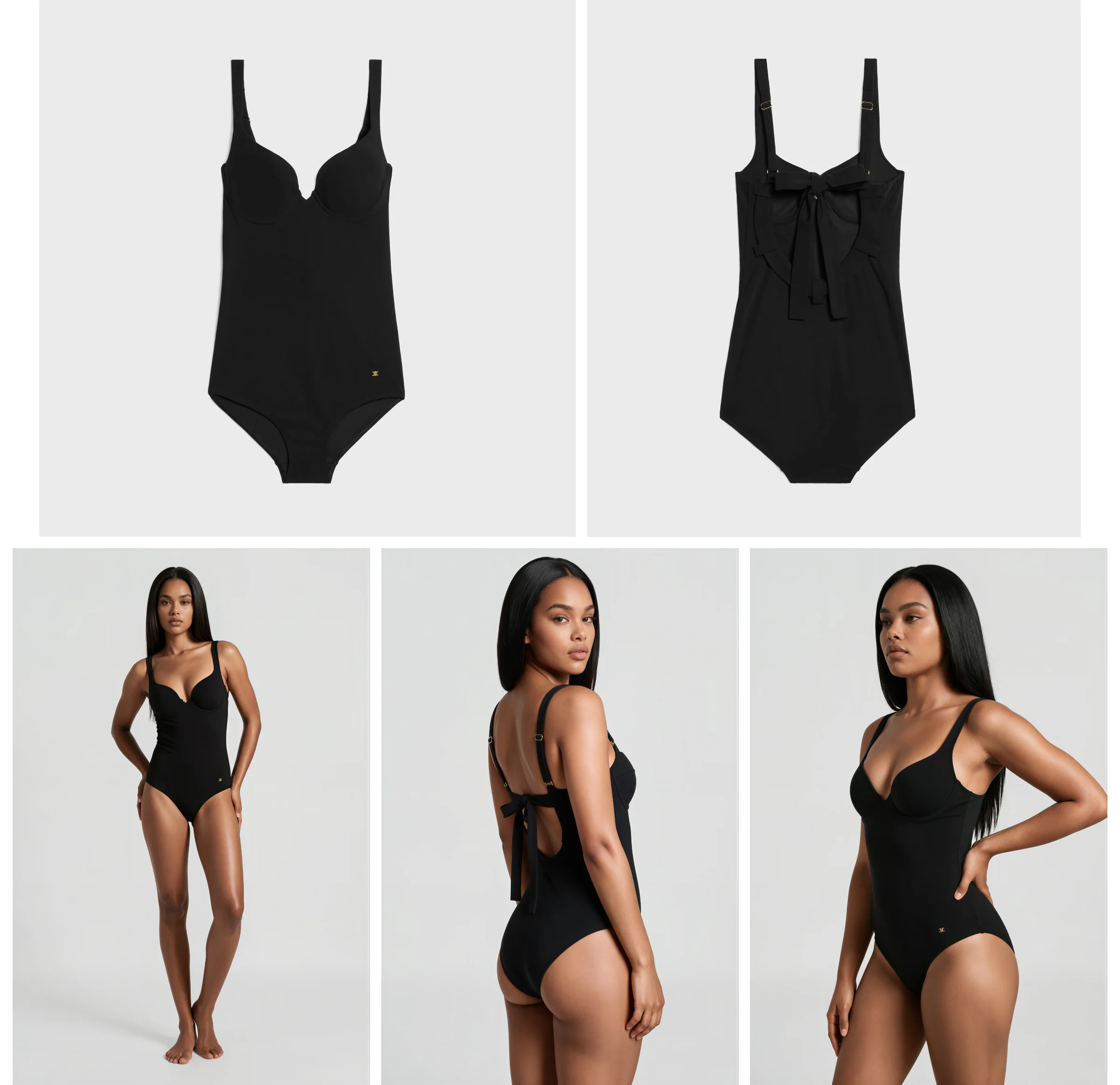
Swim is also normally where AI stops: most tools filter swimwear as unsafe and nothing generates at all. Botika is built for fashion, so this one just works. On a model you can see the bow tied at the back, where it sits and how the tails hang.
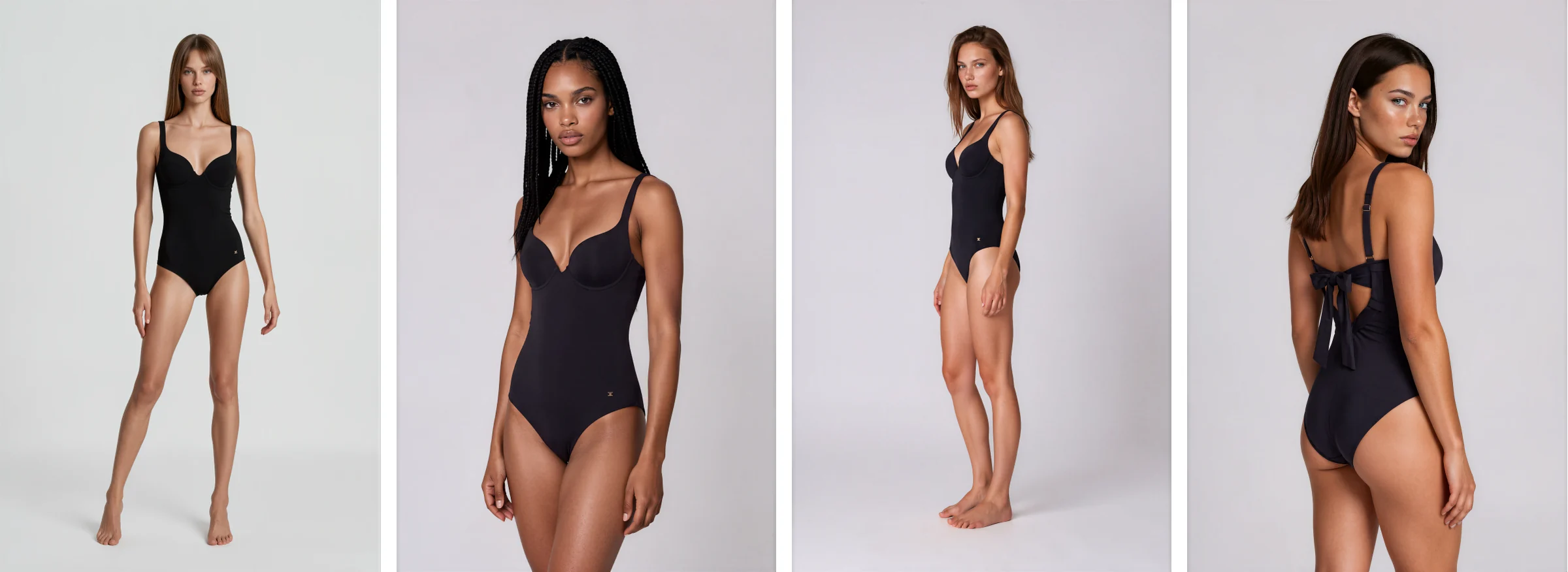
That matters most for swim. The suit sits differently on everyone, so one model only answers the question for one person. If someone cannot tell how it will fit, they either do not buy it or they buy it and send it back. A few different models is how you stop paying for that guess.
The cotton poplin shirt: a vibe, not an answer
The poplin shirt, at 1,250 USD, starts with a clean flat lay. The second image is on a model, and it is the frustrating one, because it is shot as editorial: the model is mid-pose and the shirt is bunched up with one sleeve hanging loose. You cannot tell how it is meant to be worn or how it falls.
The lighting differs from the flat lay too, so even the blue reads differently between the two photos.
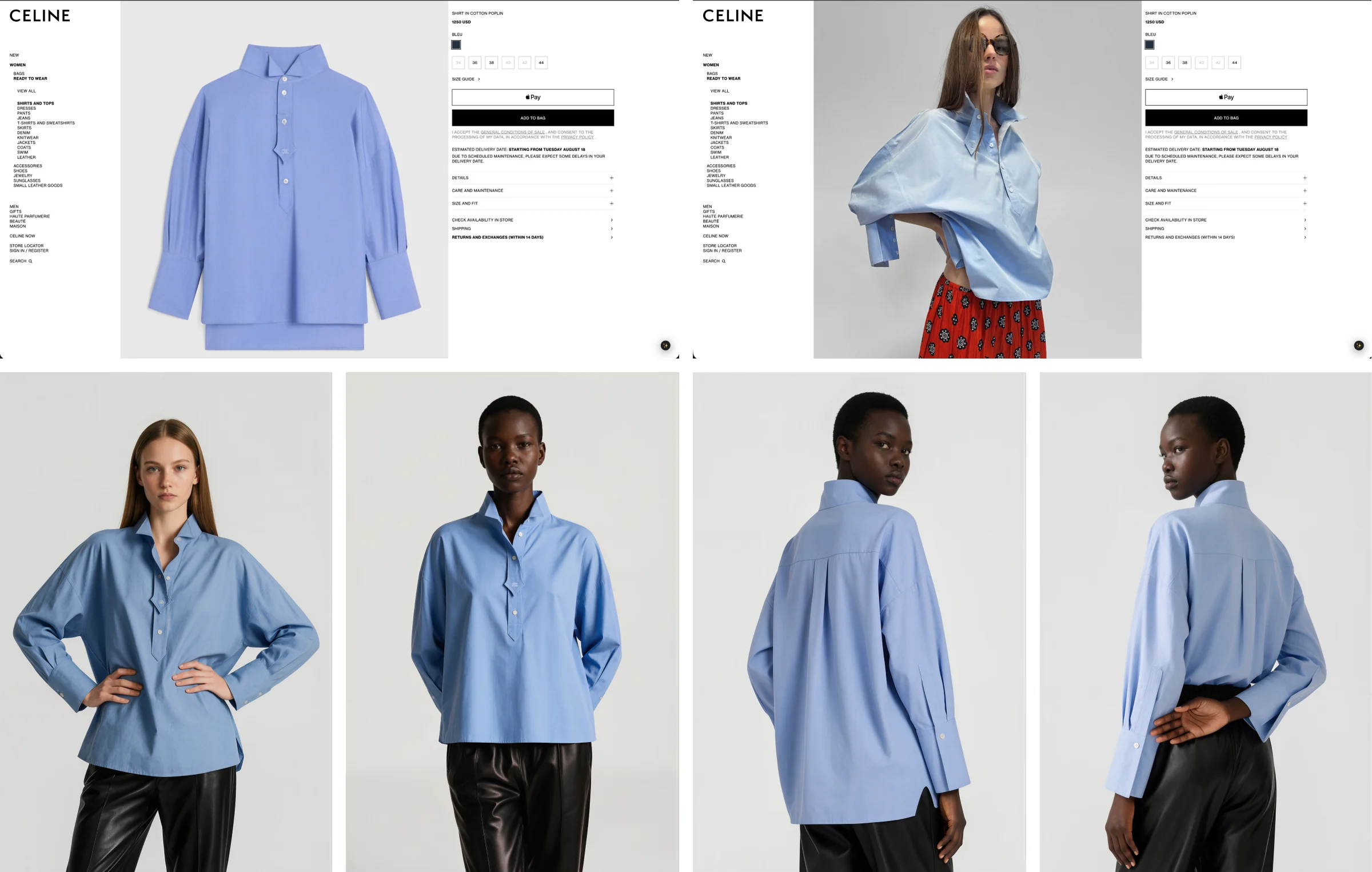
Here is the same shirt shot to inform: front, back, on a model, in the same lighting, so what you see is what turns up. And you keep the editorial. The editorial does the wanting, and this does the buying.
The printed shirt: a section of a print
The printed shirt, at 1,950 USD, has the same problem, but worse. The on-model shot is cropped and headless, so you lose the person.
The bigger issue is whether the fabric is slightly sheer or whether that is just the lighting. Sheer changes what you wear underneath and whether you can wear it to work.
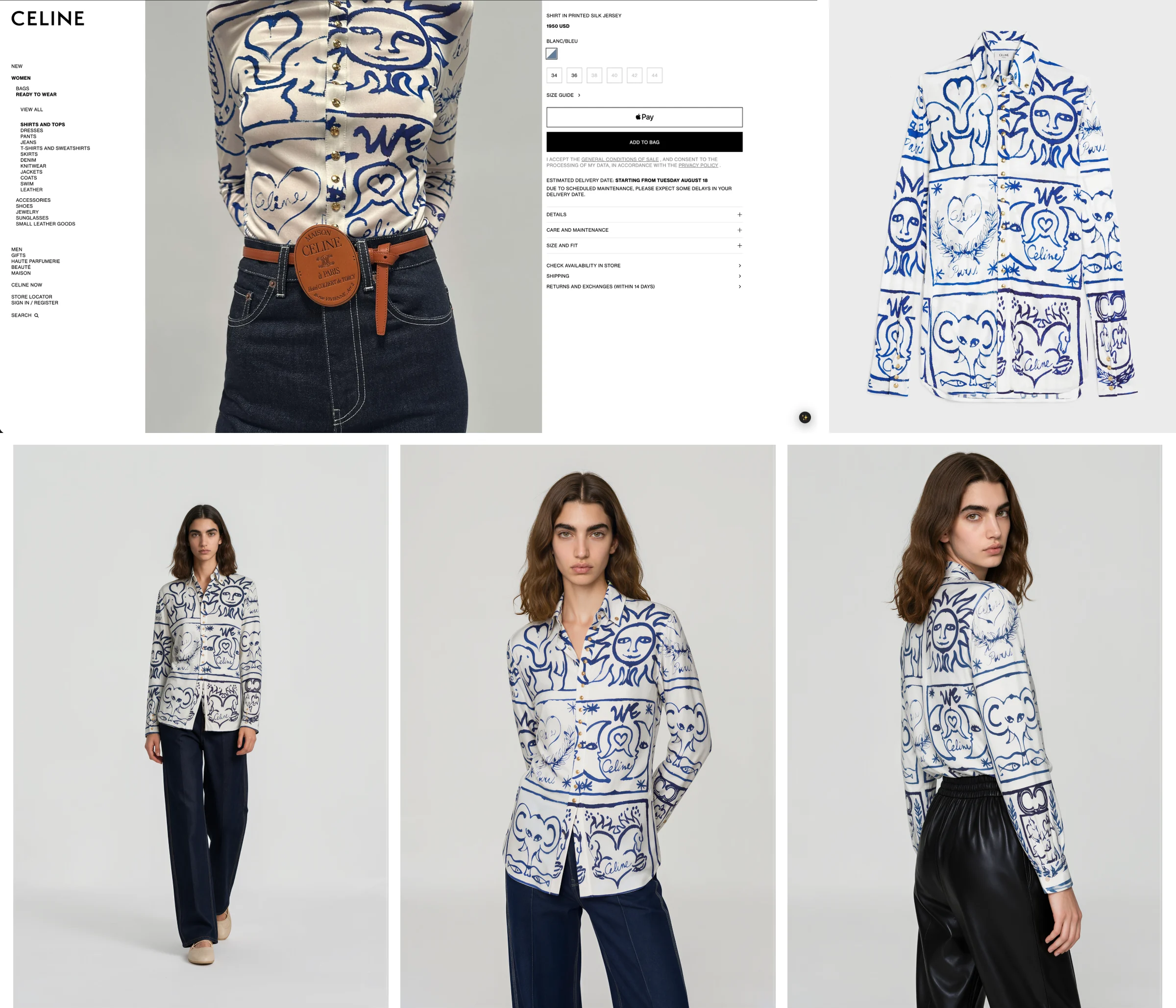
The flat lay shows the whole print, but on a body you only see a cropped section, so you imagine how it sits. Put it on a model full length and the print reads end to end. You could style it a couple of ways too, which gives people ideas.
The rainbow tee: where does it hit?
This t-shirt with the big rainbow print, at 960 USD, is a great product, but its editorial image is not doing it any favours: it is shot from the side, cut awkwardly, and a bag covers part of the print. You also need to know how long it is, because it reads longer than a normal tee. Regular or longline? Does it tuck? No way to tell.
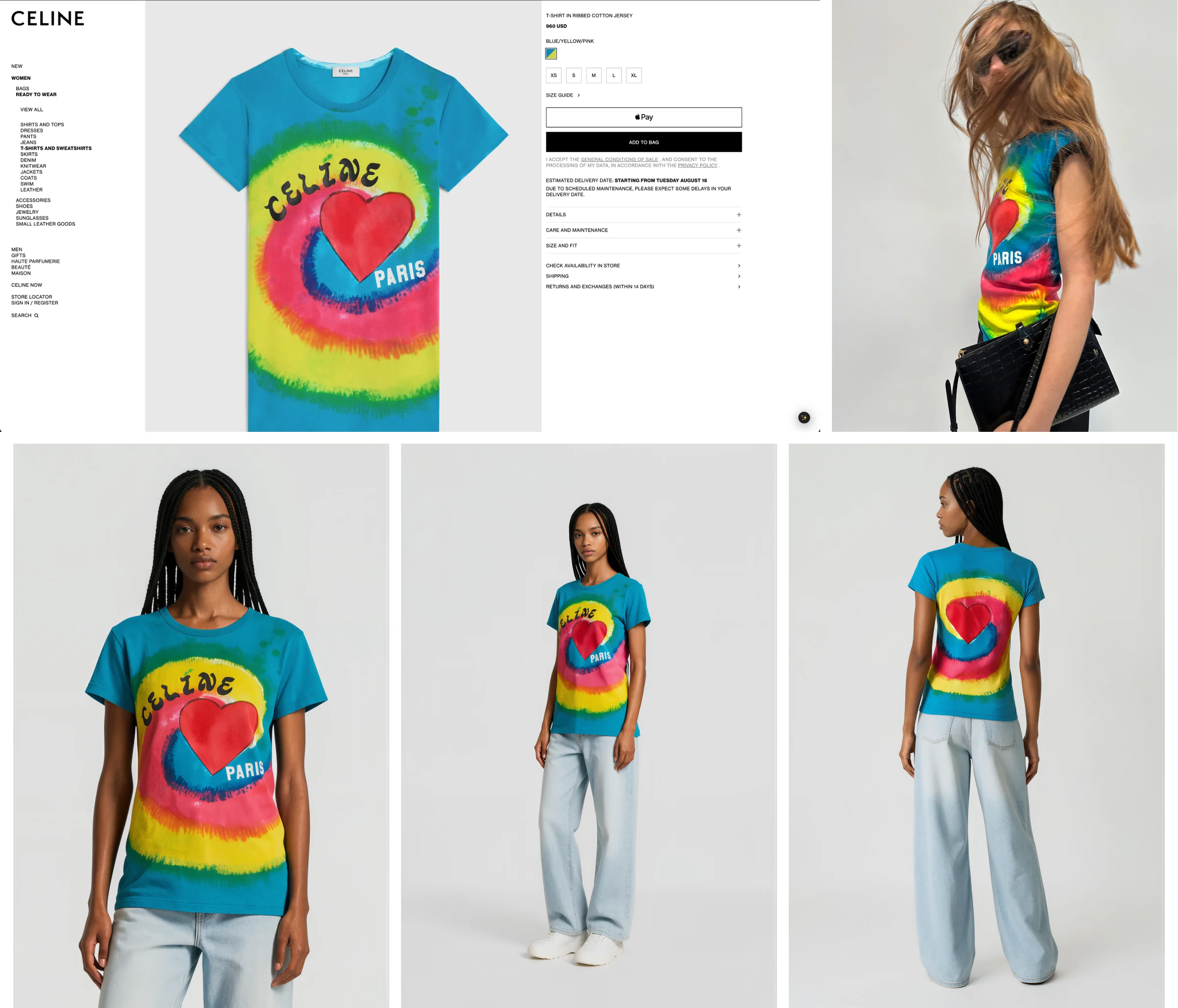
On a model, full length, front and back, you can see exactly where it hits and you get the print properly, including the back. With a print that size, how it sits across the back is half the product.
The jumper: guessing at the words
This one is quick, and it is the clearest example of the whole problem. The print runs down the arms and there is no side view. You think it says Paris down one side and Celine down the other, but you are guessing at what is written on a 1,500 USD jumper.

That is the whole review in one product: a few angles fix it.
The Fair Isle knit and skirt: where does the crop end?
The last one is the piece Celine has been running on social: a cropped Fair Isle knit in wool and cashmere, with a matching skirt. It is gorgeous. The social image is a close crop, and there is a flat lay and a fabric close-up, which is the right instinct, because with Fair Isle the texture is the point.

Credit where it is due, but it is a cropped knit, so a shopper needs to know where it ends and how it sits with the skirt. None of the three images answers either, and the skirt is in none of them. On a model, front and back, you see where the crop lands and how the set works, and you see it on different models.
Keep the vibe, answer the questions
The imagery is beautiful and nobody sells you a world better. But the product page is where the world stops and the shopping starts, and that is where it turns into guesswork. At these prices, a shopper who hesitates does not come back and one who orders wrong is an expensive return.
The first fix costs nothing, because Celine already has the images: the beautiful shots it posts on social, where the clothes are worn and moving. Put the right ones on the matching product pages.
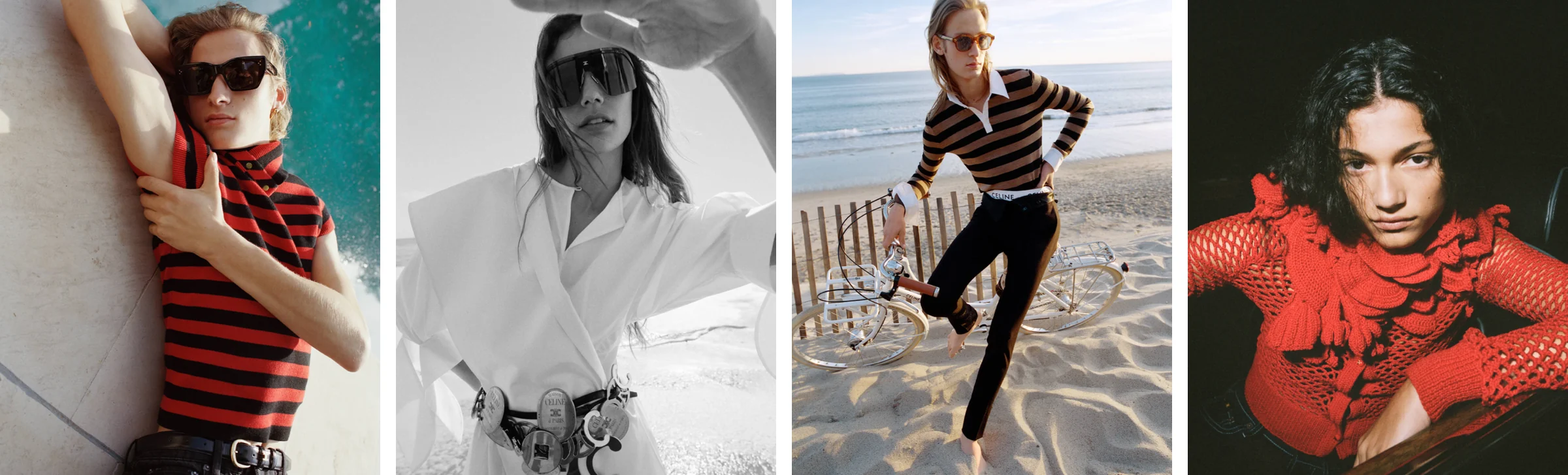
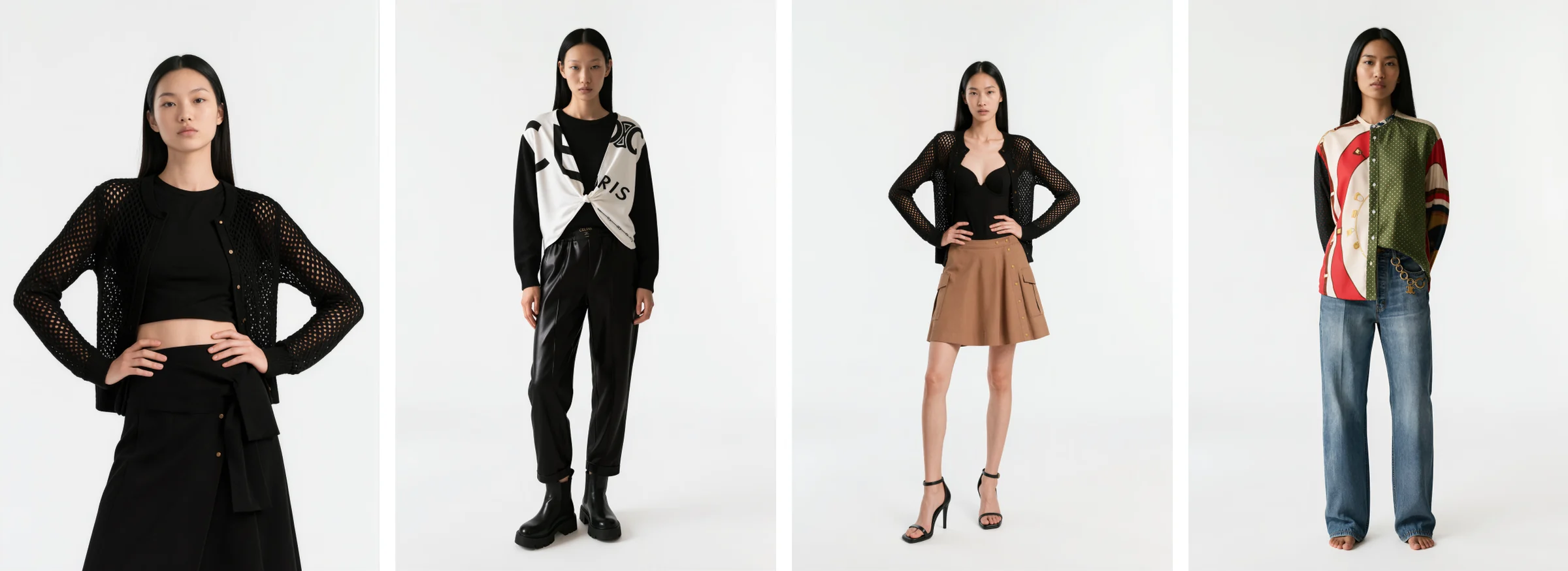
Then add what is missing underneath: on model, front and back, and a side view when the product needs one. That is where AI comes in, because nobody is booking a shoot for every product in a ready-to-wear collection.
It is also where the traffic numbers come back. A fifth of the shoppers are in Korea, nine percent in Japan, and everyone sees the same casting. With AI that is not another shoot, it is the same garment on a different model, so every market sees faces that look like theirs. Our guide to diversity in fashion covers why.
Then video, because for knitwear and swimwear you need to see how a piece moves, and a few seconds tell you what ten photos cannot. Keep the vibe, and answer the questions underneath it.
How Botika fits
Botika works from photos a brand already has, including ghost mannequin shots and flat lays. You pick the model and poses from the model gallery, so a missing back view or another model is one more photo, not one more shoot, and the short product videos come from the same photos. Our guide to fashion product detail pages covers the rest of the page.
Botika is the AI operating system for fashion content. Brands on Botika cut production costs by 90%, move from sample to live 10x faster, and lift conversion by 40%.
Watch the full episode
The episode walks through all six products. Watch it on YouTube, and tell us in the comments which brand Brands in Review should look at next. Before you book another shoot, see what your own pages could look like with a free trial.
Brands in Review, episode two. A concept exploration using public product pages and Similarweb traffic estimates. Not affiliated with or endorsed by Celine. Opinions are our own.