Can ChatGPT, Claude or Midjourney do your product photography?
It is a reasonable thing to try. You already pay for ChatGPT. You have Claude open in another tab. Midjourney produces beautiful fashion imagery. So why buy anything else to photograph your products?
The honest answer is that most of these tools were built to create an image, and a product page needs you to reproduce one. Those are different problems, and the difference shows up on the garment rather than in the styling.
This is not a knock on any of them. They are remarkable at what they were designed for. It is worth being precise about what that is, because the distinction decides whether an image can go on a storefront.
Here is what each type of tool actually does, and where each one genuinely fits in a fashion workflow.
The distinction that decides everything
General image models are generative. Given a prompt, or a prompt plus a reference, they produce a plausible new image. Plausible is the operative word: the output is an interpretation.
Product photography is reproductive. The garment in the photograph has to be the garment in the warehouse, down to print scale, seam placement, button spacing and how the fabric falls.
When a generative model reinterprets a sleeve, that is the model working correctly. When a product page reinterprets a sleeve, that is a return.
So the question to ask any tool is not "can it make a good fashion image". It is "does it preserve my specific product, or does it invent a convincing one".
What each tool is actually built to do
| Tool | Images out? | Built for | Where it fits in fashion |
|---|---|---|---|
| Claude | No | Reading and reasoning, including reading images | Writing product copy, auditing a catalogue, checking alt text |
| ChatGPT (GPT Image) | Yes, from prompts and reference images | General image creation and editing | Concepts, mood, social one-offs, background exploration |
| Midjourney | Yes, prompt and reference led | Distinctive, art-directed imagery | Mood boards, campaign direction, look and feel |
| Higgsfield | Yes, plus video and motion | A creative suite for film, marketing and content | Campaign video, motion pieces, paid social creative |
| Purpose-built fashion imagery | Yes, from your own product shots | Reproducing a specific garment at catalogue scale | Product page and PDP imagery, every SKU |
Read that last column as a workflow rather than a ranking. A fashion team can reasonably use three of these rows in the same week for three different jobs.
Claude is the clearest case, and it is not a limitation
Claude does not produce images at all. Anthropic's own documentation is explicit: it is an image understanding model only, able to interpret and analyse images but not to generate, edit or create them.
That makes it useless for photography and genuinely useful next to it. It reads images, so it can audit a catalogue for missing alt text, draft product descriptions from a photograph, or check whether a batch matches a written specification.
Worth knowing before you spend an afternoon trying to make it work.
The consistency problem is the real one
The tools that do generate images are better at garment fidelity than they were a year ago, and it is worth being fair about that. A single good result is very achievable now.
The difficulty is the second hundred. OpenAI's own guidance notes that its image model may struggle to maintain visual consistency for recurring characters or brand elements across multiple generations, and may have difficulty placing elements precisely in structured compositions.
That is an honest description of a general model, and it is exactly the property a catalogue cannot tolerate. A product page needs the same model, the same light, the same crop and the same treatment across every style you sell.
One frame is a demo. Four hundred matching frames is a catalogue, and the gap between them is a workflow rather than a better prompt.
What a purpose-built tool does differently
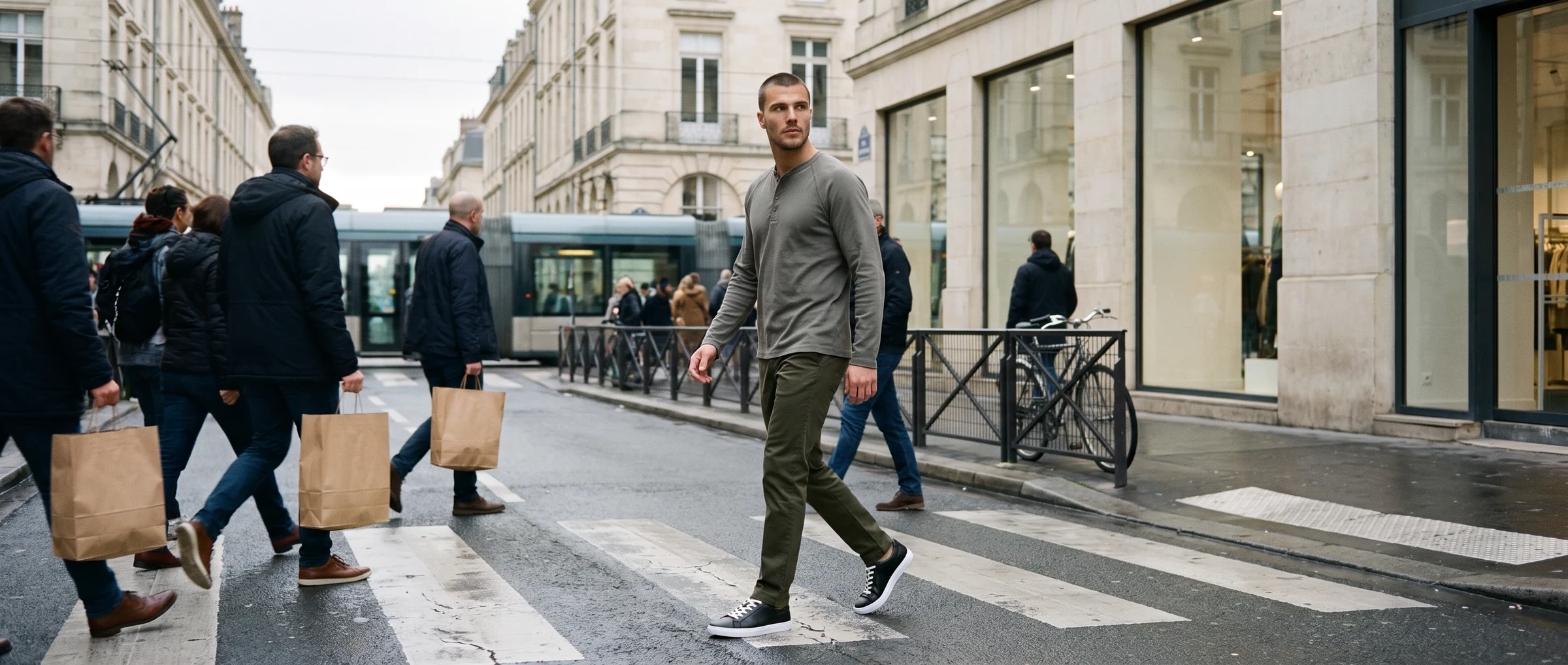
It starts from your product, not a description. Production runs from a flat lay, packshot or ghost mannequin shot you already own, so the garment in the output is the one you stock rather than a plausible version of it.
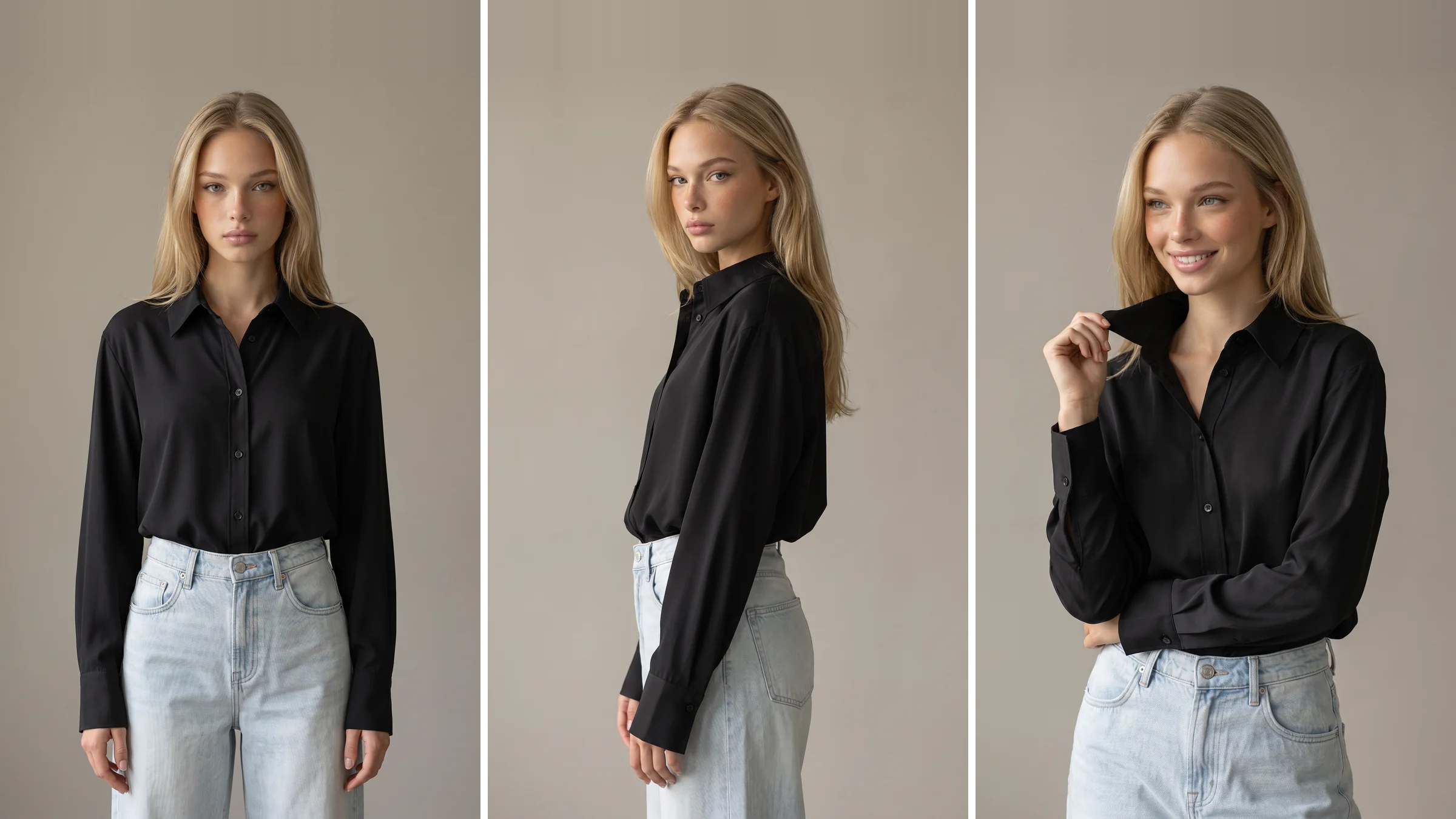
It holds a specification. Lighting, crop, posture, background and output format are set once and applied to every image, which is what stops a collection page looking like three separate projects.
It reviews output before delivery. Botika pairs proprietary AI with a fashion-trained QA and retouching team, because generative output always produces near-misses and someone has to catch them. Doing that review yourself is a real cost.
It delivers to a publishable spec. Dimensions, format and compression arrive consistent, with no watermark, ready for a product page and a Shopping feed.
It scales linearly. Producing four hundred images is the same operation as four, run more times, which is a property of the pipeline rather than of the model.
How to test this yourself in an afternoon
Do not take anyone's word for it, including ours. The test is quick and the result is unambiguous.
Take your hardest garment. A busy print, a technical fabric, or something with structured tailoring. Not a plain tee, which almost anything handles.
Run it through whichever general tool you already pay for, and through a purpose-built one. Then produce the same garment five more times in each.
Put the results side by side at full size and look at the print scale, the seams, the hardware and the hem. Then ask whether a shopper buying from any of those images would be surprised by the parcel.
That comparison, on your own product, settles it faster than any feature list. You can run ours on a free trial with no card, and see the model range and on-model output first.
Where this is heading
General models keep getting better at garment fidelity, and the gap on any single image is narrowing. The gap that matters is the four hundredth image, and that one is closed by workflow rather than by model quality.
Pick tools by the job rather than by the demo. Then test the one that will touch your product pages on your hardest garment, because that is where the cost of being wrong actually lands.
Common questions about using general AI tools for product photography
Can ChatGPT create product photos for my store?
It can create product-style images, and it can edit from a reference. What it does not promise is reproducing your exact garment consistently across a catalogue. OpenAI's own documentation notes possible difficulty holding visual consistency for recurring brand elements across multiple generations.
Can Claude generate fashion images?
No. Anthropic's documentation states Claude is an image understanding model only and cannot generate, edit or create images. It is useful for reading and writing about imagery, not producing it.
Is Midjourney good enough for ecommerce product photography?
It is excellent for art-directed imagery and mood, which is a real job in fashion. It is prompt and reference led rather than built to reproduce a specific physical garment, so it suits campaign direction better than PDP imagery.
What about Higgsfield?
Higgsfield describes itself as an AI-native creative suite spanning video, image and motion, aimed at film, marketing and content creation rather than fashion product photography specifically. That makes it a strong fit for campaign video and paid social creative.
Why can a general model not just be prompted into consistency?
Because consistency at catalogue scale is a process property, not a prompt property. It comes from a written specification, one pipeline and a review gate on every batch, none of which a prompt provides.
Do I need to choose one tool?
No, and most teams should not. Use a general model for concepts and campaign look, a creative suite for video, and a purpose-built tool for the imagery that sits on product pages. They solve different problems.