Botika vs Midjourney for fashion imagery

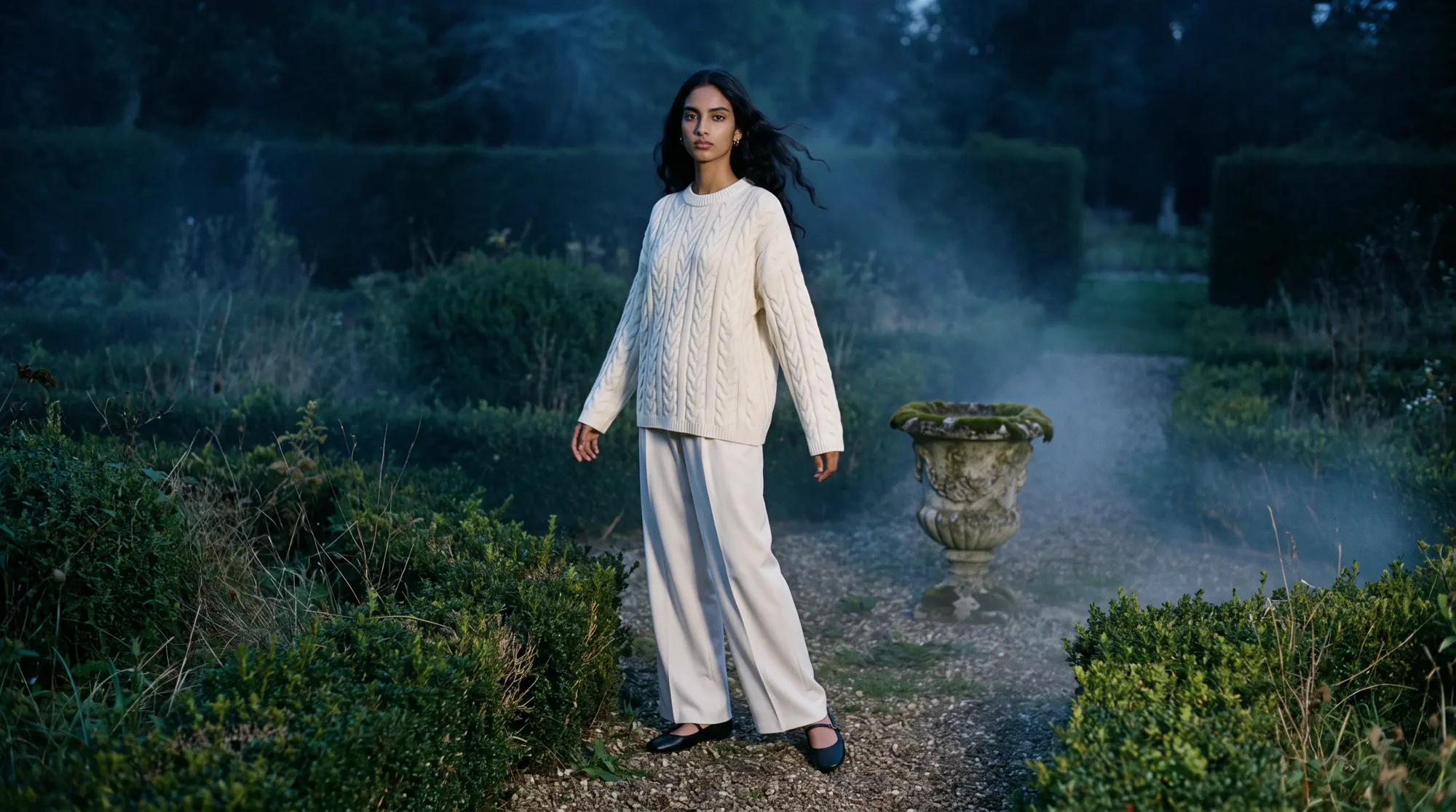
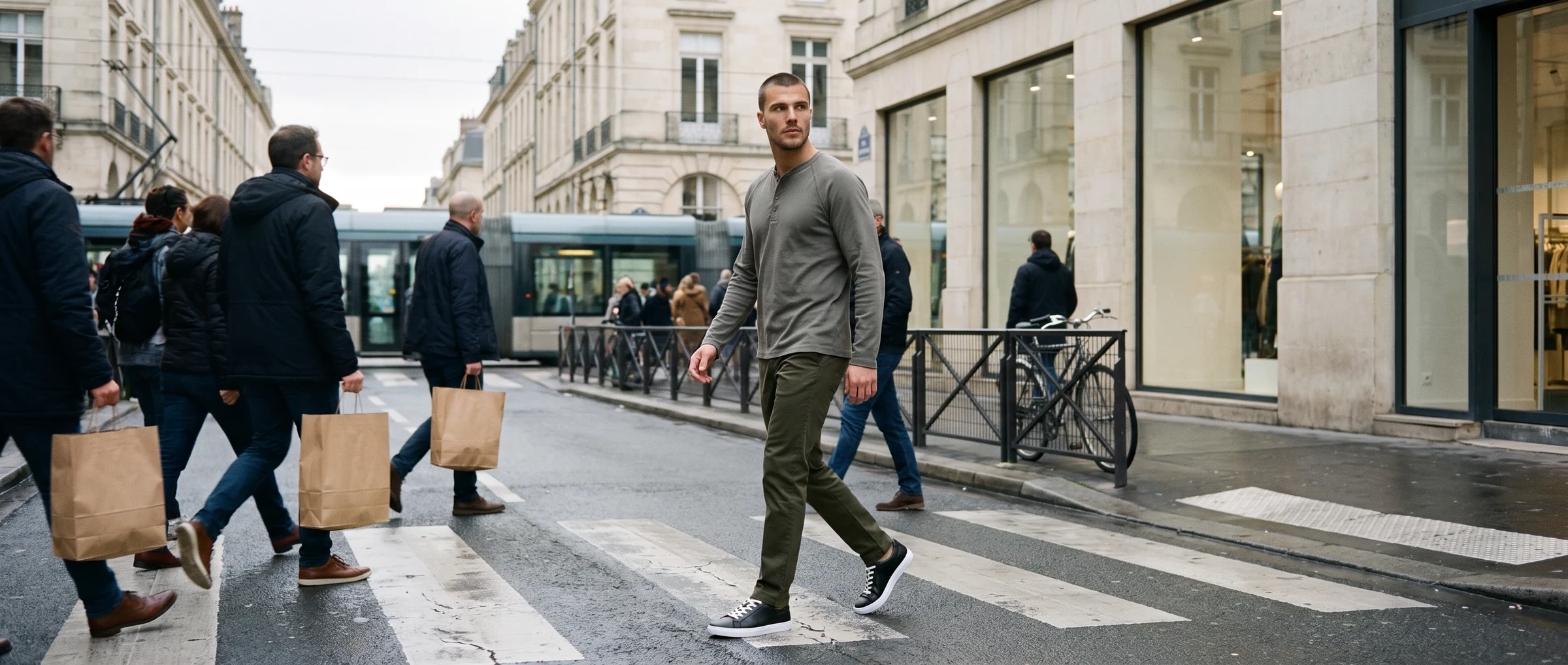
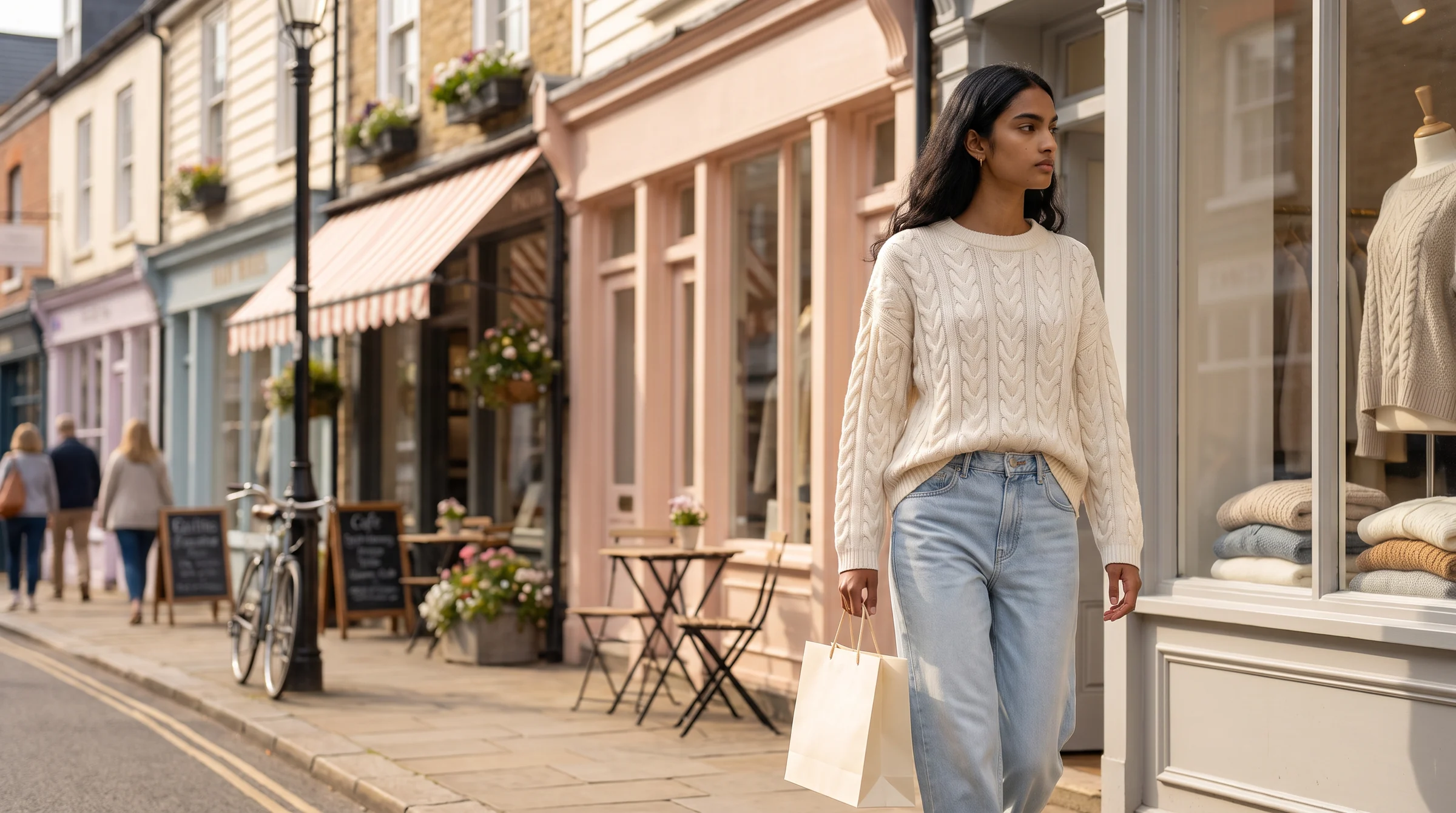
Midjourney produces some of the most beautiful fashion imagery available anywhere. That is not in dispute, and it is why the question keeps coming up: if it can make images this good, why not use it for the product pages?
Midjourney answers this itself, more clearly than any comparison could. Its documentation states that it uses image prompts and references as inspiration to guide new creations, not to copy them exactly.
That single sentence is the whole difference. Inspiration is precisely what you want for a campaign and precisely what you cannot have on a product detail page.
Here is where each one belongs.
What Midjourney is built for
Midjourney is an image-making instrument with a strong aesthetic point of view. It rewards direction, and it produces work with character rather than work that looks generated.
Its reference features are built around guidance rather than duplication. Style Reference matches the look and feel of another image. Image Prompts take an image's core elements as a source of inspiration for a new and unique image. The Editor allows inpainting and outpainting on your own images.
Every one of those is a creative control. None of them is a promise to hold a specific garment unchanged, and Midjourney does not claim otherwise.
For a fashion brand that is genuinely useful. Season direction, campaign concepts, mood, art direction, casting feel, set ideas. Real work, done faster.
It is worth being clear that inspiration is the correct behaviour for that work, not a shortcoming. A tool that reproduced its reference exactly would be useless for finding a look, because you would only ever get back what you already had. The range comes from the reinterpretation.
What Botika is built for
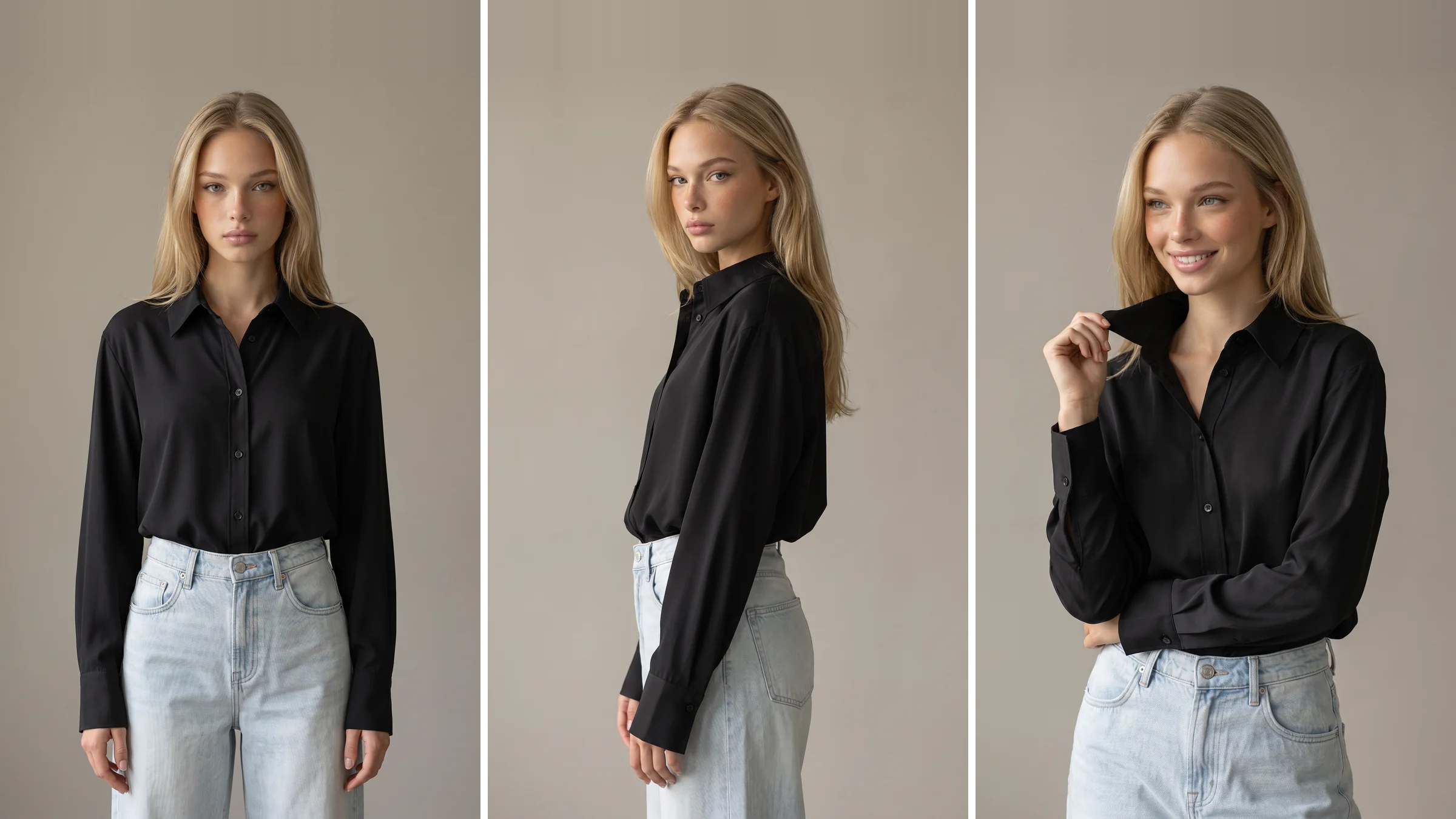
Botika works the other way round. It starts from a garment that exists, in a photograph you already have, and its job is to leave that garment alone while changing everything around it.
Print scale, seam placement, hardware, button spacing and drape all have to come through unchanged, because a shopper is going to make a purchase decision from the result.
It then holds one look across the whole catalogue, using a written specification, a single pipeline and a fashion-trained QA and retouching team that reviews output before it reaches you.
It has no aesthetic ambitions beyond your brand's. That is deliberate.
Side by side
| Midjourney | Botika | |
|---|---|---|
| Treats your image as | Inspiration, in its own words | The product to be preserved |
| Strongest quality | Aesthetic character and range | Garment fidelity and repeatability |
| Same look across 400 images | Not what it is designed to do | The core requirement |
| Who reviews output | You, as art director | A fashion-trained QA team |
| Right for | Mood boards, campaign concepts, direction | Product pages, every SKU |
| Wrong for | Anything a shopper buys from | Inventing a garment that does not exist |
Where Midjourney is the better choice
Season and campaign direction. Getting to a look worth committing to is faster with a tool built for range, and range is where Midjourney is strongest.
Mood boards a team can react to. Twenty striking frames beat a written brief in most rooms.
Set, location and styling ideas. Exploring places and treatments you would never budget to shoot speculatively.
Anything where being surprised is a feature. If you cannot describe a wrong answer, you are in Midjourney's territory and a fidelity-first tool would only get in the way.
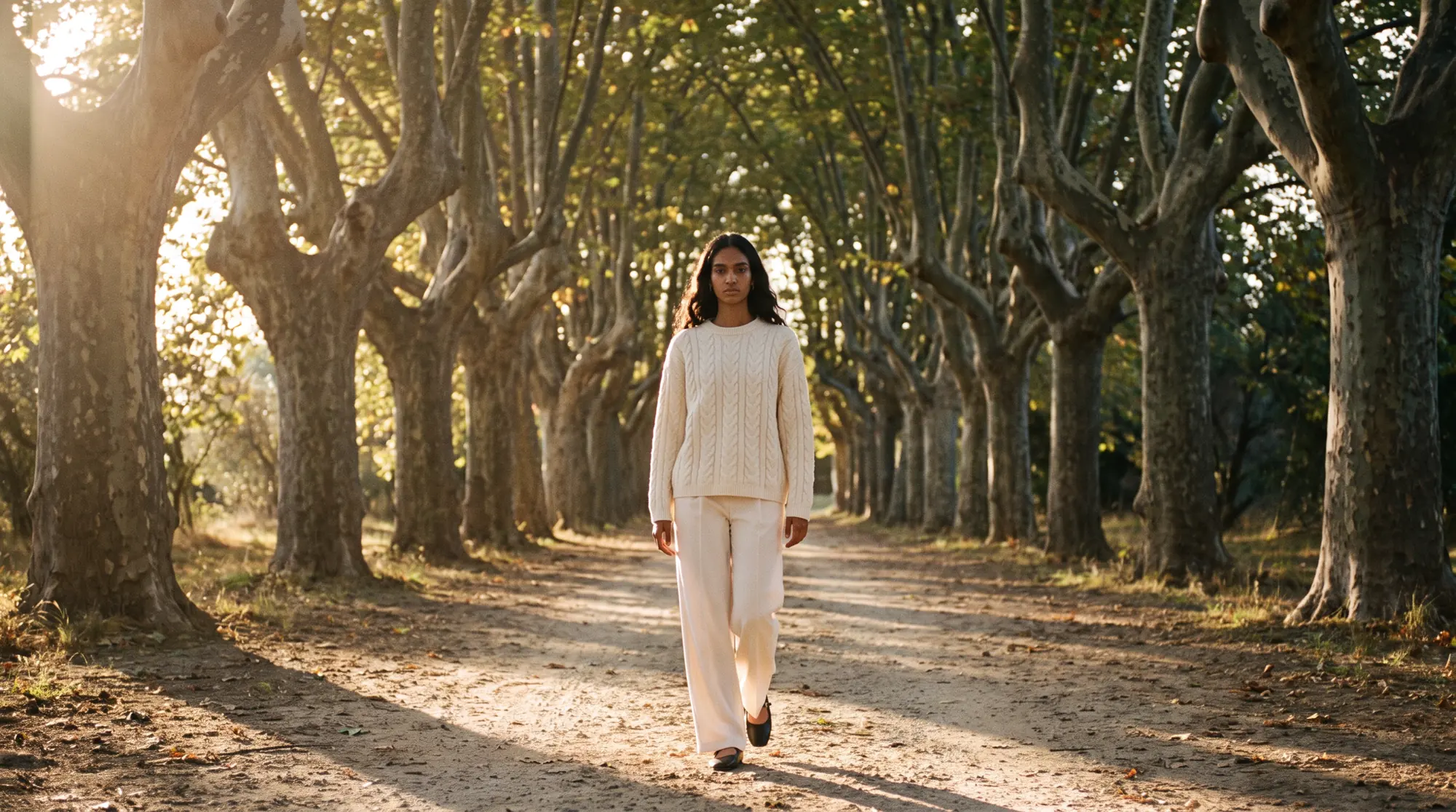
Where Botika is the better choice
The product detail page. The garment has to be the one in the box, because the alternative is a return.
Anything at catalogue volume. Repeatability across hundreds of styles is a workflow property, and it is what Botika is arranged around.
Converting flat lays you already hold. Most brands have packshots for the whole range and on-model imagery for a fraction of it. Closing that gap is the specific job.
When output has to be publish-ready. Consistent dimensions, no watermark, reviewed by a person who understands garments.
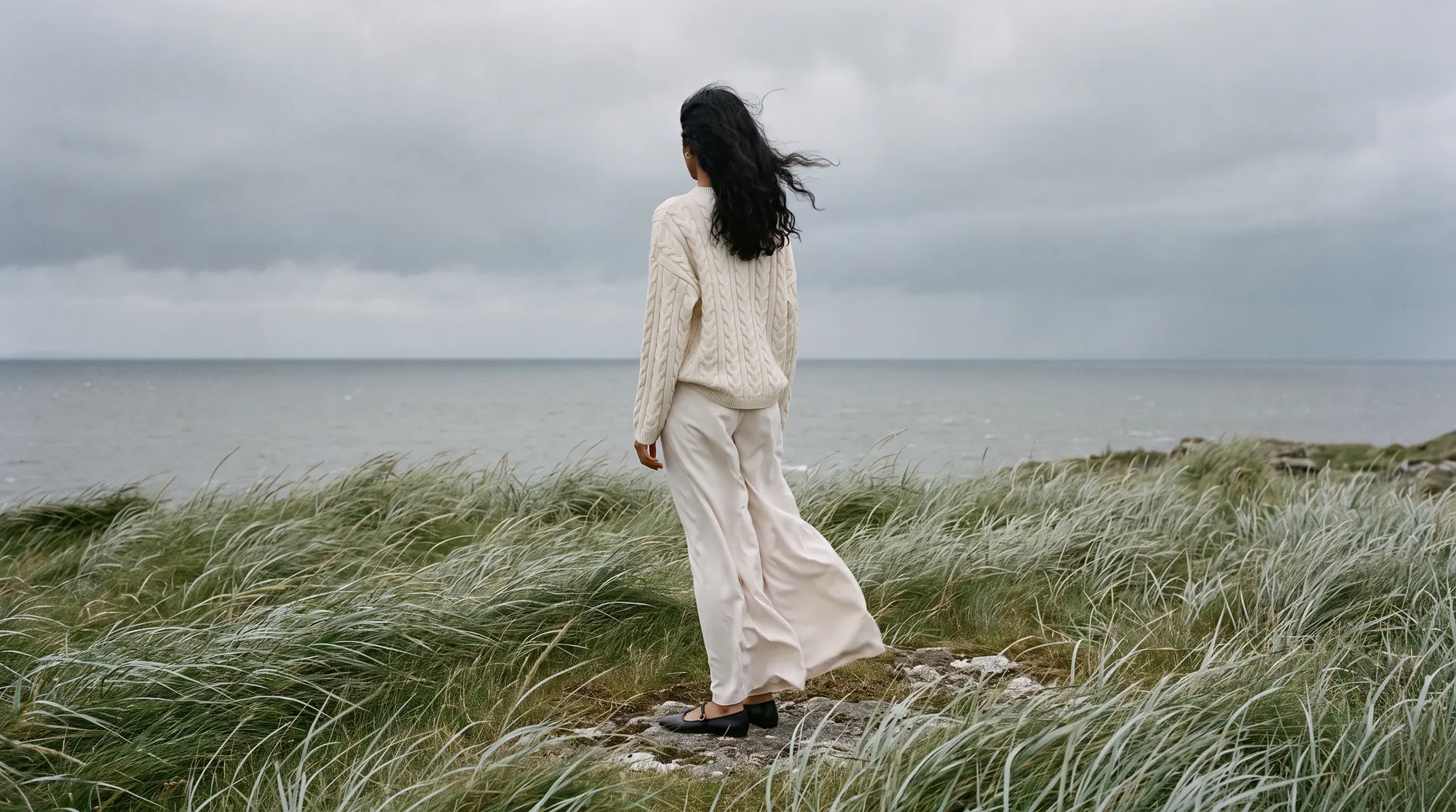
The test that settles it
Take your hardest garment. A busy print, a technical fabric, or structured tailoring, not a plain tee.
Produce it six times in each tool, then compare the twelve at full size. Look specifically at print scale, seam lines and hardware, because those are where reinterpretation shows first.
Then ask whether a shopper buying from each image would be surprised by the parcel. On a mood board that question is irrelevant. On a product page it is the only one that matters.
The signatures to look for are specific. Print scale drifting so a repeat sits at the wrong interval. Seam lines moving on a shoulder or side panel. Hardware simplifying, so a particular button or zip becomes a generic one. A structured collar softening into something plainer. At thumbnail size all four are invisible, which is why the comparison has to happen at full size.
Ours runs on a free trial with no card. Begin with flat lay conversion, check the model range against your customer, and look at per-image pricing after you have seen your own results. If your source material is mannequin shots, ghost mannequin conversion is the equivalent route in.
Use both, in that order
The natural sequence runs upstream to downstream. Midjourney or a similar tool to find the look, then a purpose-built platform to execute it across every product you sell. Problems appear when the sequence gets collapsed: a beautiful concept image on a product page converts well and then generates a return, because the garment that arrives is not quite the garment in the picture.
Creative models will keep getting more controllable, and fidelity-first tools will keep getting more expressive. The two categories are converging slowly and are unlikely to merge, because they are optimising for opposite things.
Name the job, then pick. And test whichever one will touch a product page on the garment you would least like to get wrong.
Common questions about Botika and Midjourney
Can Midjourney reproduce my exact garment?
It is not designed to. Midjourney's documentation says it uses image prompts and references as inspiration to guide new creations rather than to copy them exactly, which is the correct behaviour for a creative tool.
What is the difference between Botika and Midjourney?
Midjourney creates a new image inspired by what you give it. Botika reproduces the garment you give it. One is for finding a look, the other is for selling a specific product.
Is Midjourney good for fashion?
Very. For mood, campaign direction, set and styling ideas it is excellent, and those are real jobs in a fashion calendar. It is simply not built to hold one physical garment constant across a catalogue.
Could I use Midjourney's Editor to fix garment accuracy?
The Editor supports inpainting and outpainting on your own images, which is useful for local changes. It is a manual creative control rather than a pipeline that guarantees fidelity across hundreds of products.
Which should I buy first?
Whichever matches your bottleneck. If you cannot decide on a look, start upstream. If you have a look and four hundred products missing on-model imagery, start with the reproduction tool.
Do the two overlap at all?
Mostly at the edges, such as backgrounds and secondary lifestyle imagery. The core jobs, finding a look and reproducing a product, barely overlap.