AI female fashion models: What works for womenswear and what needs care

Womenswear carries the hardest imagery problem in fashion ecommerce. More SKUs, faster turnover, more silhouettes, and shoppers who judge fit more closely than in almost any other category.
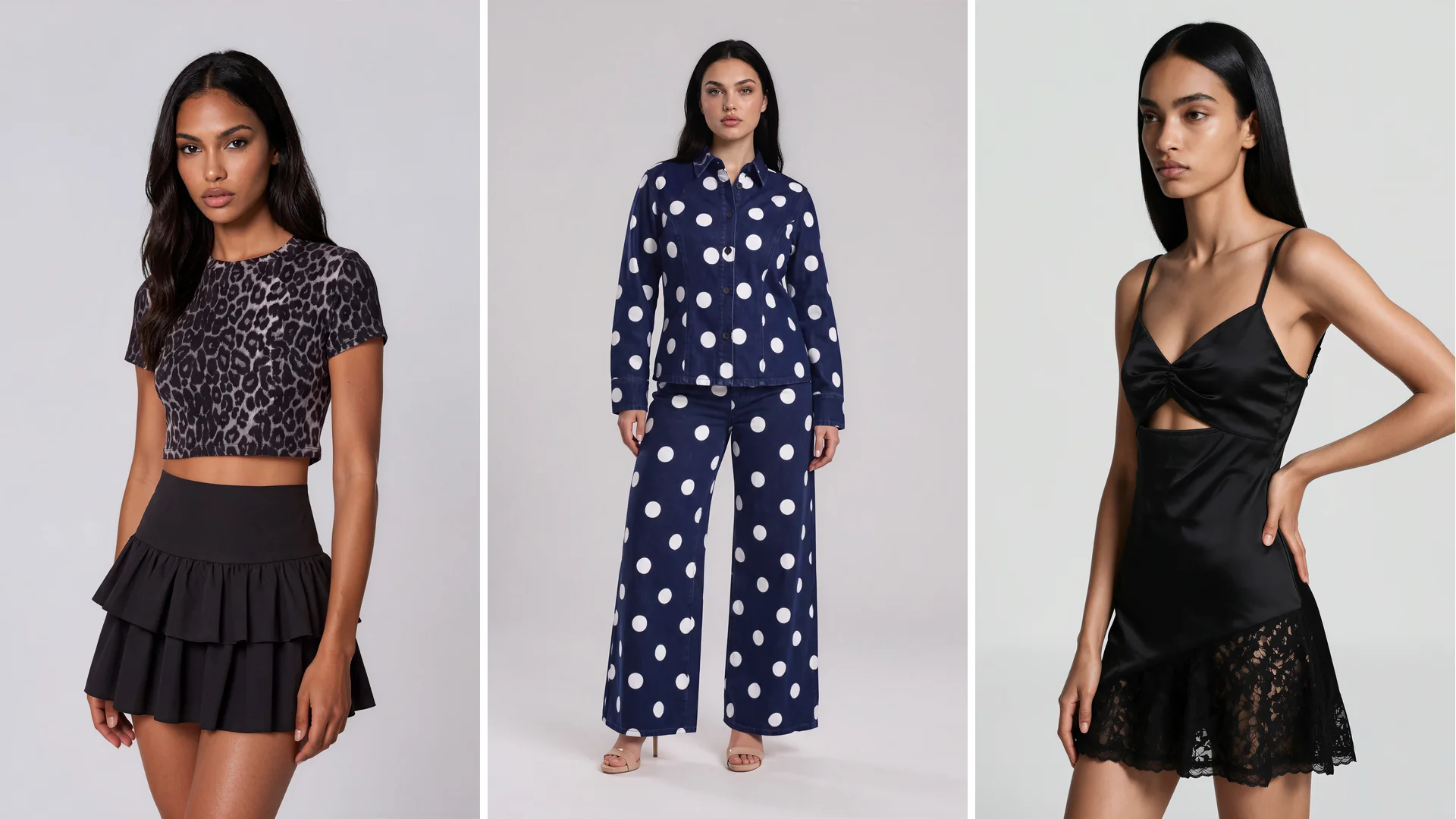
It is also the category where AI female fashion models have landed fastest, because the volume pressure is highest and the same garment often needs showing on more than one kind of body.
It is also where the cost of on-model photography adds up fastest. A womenswear brand dropping fifty new styles a season is looking at a shoot calendar that never quite closes, and a set of product pages where half the range gets proper treatment and the rest gets a flat lay.
AI fashion models change that arithmetic. You upload the garment photo you already have and get back that piece worn by a model, with the fabric and fit intact, and no shoot booked.
This guide covers what AI models do well in womenswear, where they need care, and how to roll them out without gambling a collection on it.
Why womenswear feels the difference most
Three things stack up in this category.
Volume is the first. Womenswear ranges are larger and cycle faster, so the gap between what you can shoot and what you actually sell is wider.
Fit judgment is the second. Shoppers are reading drape, length, and proportion, and those are the questions a flat garment cannot answer. Apparel already carries the highest return rates in ecommerce because fit and sizing are hard to judge from a product page.
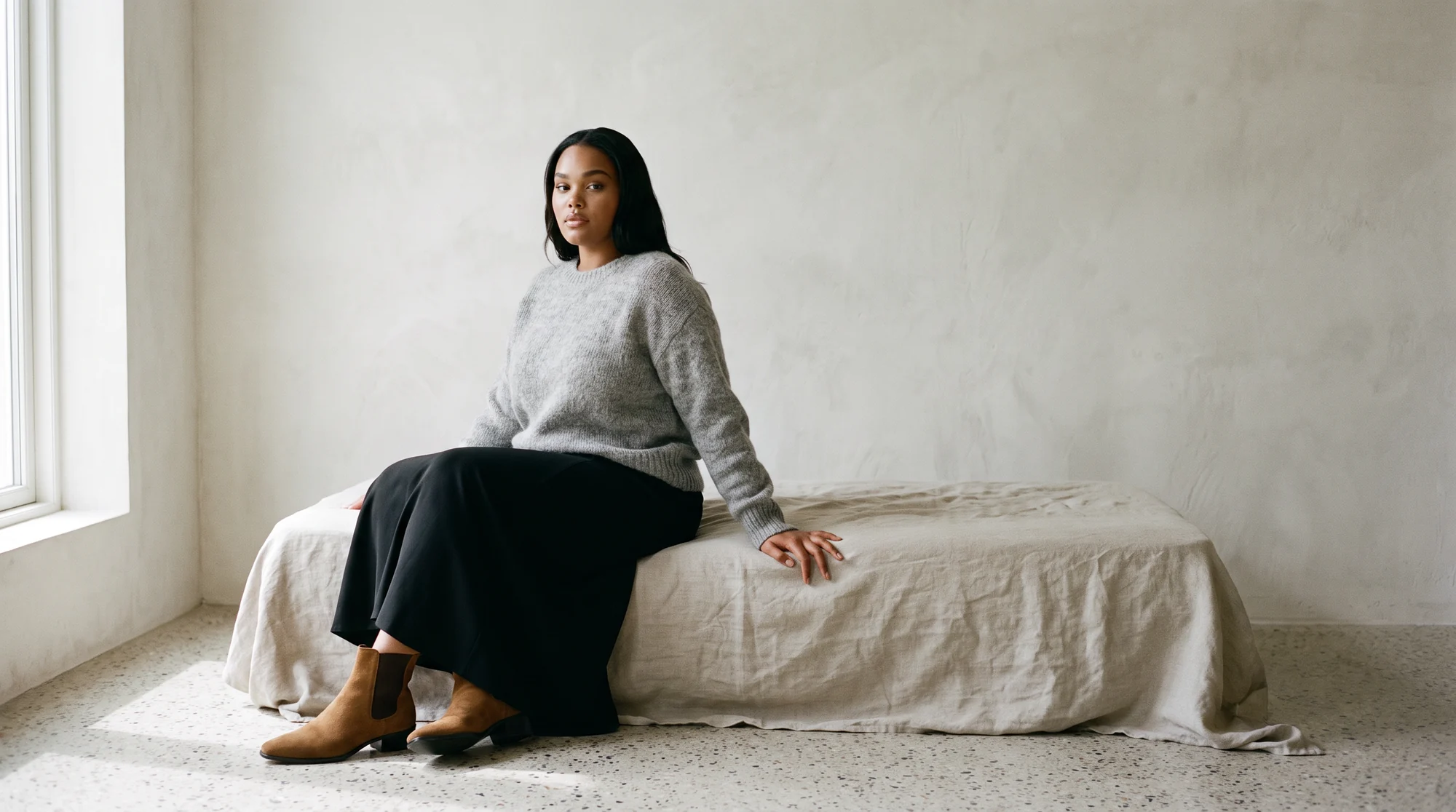
Representation is the third. A womenswear customer base is not one body type, and a single model on every listing quietly tells most of your shoppers to imagine the rest. It shows up in the returns data too, where size, fit, or color is the leading reason an order comes back.
What AI models handle well here
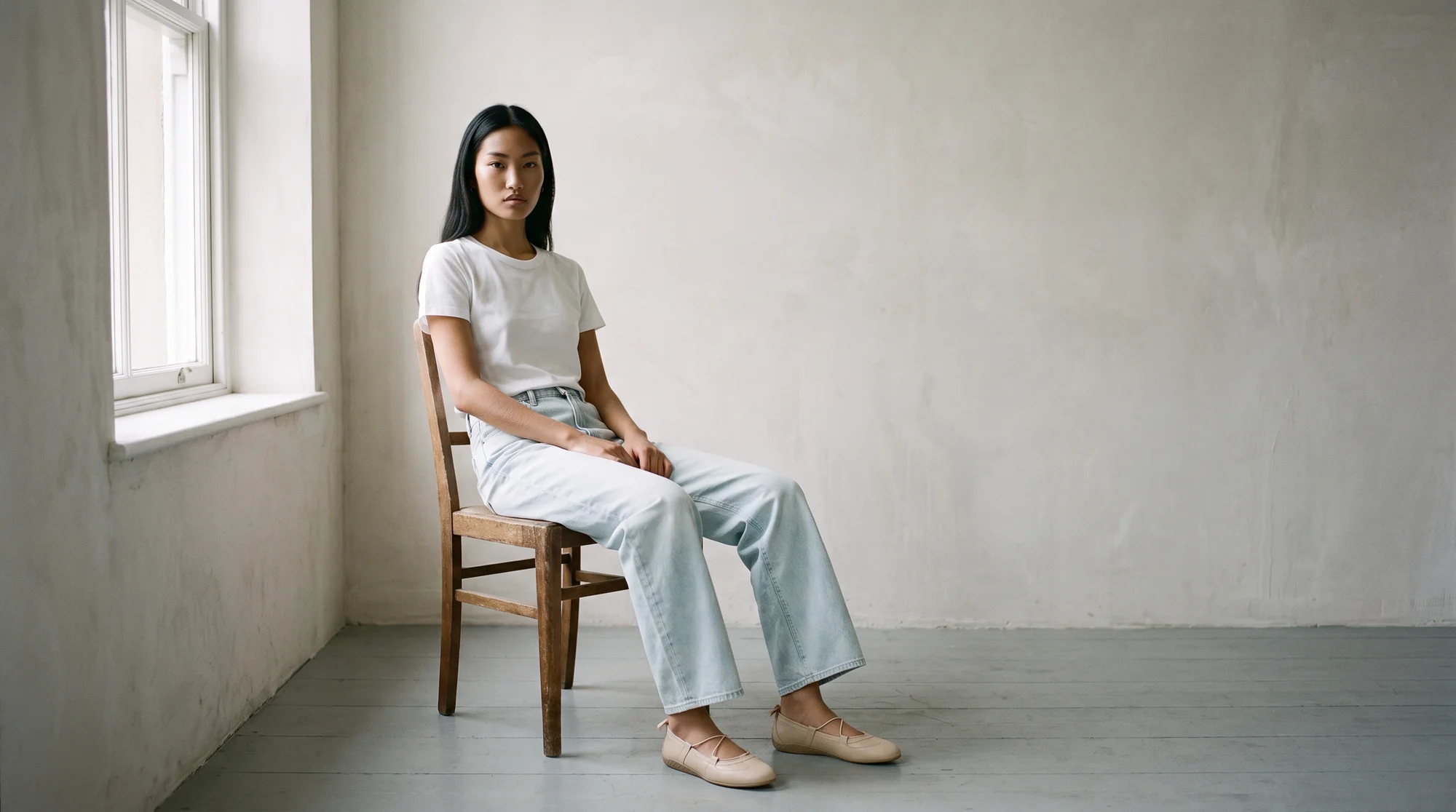
Start with the everyday range, because that is where the volume sits. Knitwear, denim, shirting, tailoring, jersey, and loungewear all convert cleanly from a decent source image.
Then use the thing a shoot cannot give you cheaply: the same dress or top across several model types, without a second booking. That is better representation and a practical head start when you expand into a new market.
Framing follows the garment. Tops read best as an upper-body crop. Dresses, skirts, and trousers need full-body treatment with footwear chosen deliberately, because a shopper looking at a hemline is reading the whole silhouette.
And once a still exists, it can become a short product video, which is where movement finally answers the drape question.
There is a fourth factor that gets overlooked: the sheer number of variants. A single womenswear style often ships in four colourways, and each one technically needs its own on-model shot. Traditional production treats that as four times the work. Generating from existing photography treats it as four inputs, which is where the volume argument stops being theoretical.

Where to take more care
| Garment category | Converts cleanly | What to check first |
|---|---|---|
| Knitwear | Yes | Stitch texture on fine gauge |
| Denim | Yes | Wash and seam detail |
| Shirting and tailoring | Yes | Collar and shoulder structure |
| Jersey and loungewear | Yes | Drape on soft fabric |
| Dresses and skirts | Yes, full-body framing | Hemline and length |
| Bold or aligned prints | With checking | Pattern alignment across seams |
| Sheer fabrics | With checking | Transparency and layering |
| Structured statement pieces | With checking | Unusual shoulder or neckline |
| Sheer intimates | Not yet | Keep on a traditional shoot |
Some womenswear categories are genuinely harder, and being honest about them saves time.
Sheer fabrics and fine knits are where weak output shows first. Test those before you commit a range.
Prints that have to align across a seam are the second stress test. A pattern that drifts is the clearest tell that a tool is generating a similar garment rather than dressing yours.
Structured pieces with unusual construction, a strong shoulder or an architectural neckline, deserve a look before they go live rather than after.
Intimates and very revealing pieces are the category to keep on a traditional shoot for now. Loungewear converts well; sheer intimates are not the place to start.
The business case, in order
1. Garment accuracy first
The output has to remain a photograph of the piece a shopper will receive. Fabric, print, drape, and fit all need to survive, or the image buys a return.
2. Consistency across the range
A collection page should read as one shoot. Holding lighting, framing, and model treatment steady across fifty styles is the hard part, and it is what separates a usable workflow from a nice demo.
3. Reliability at range scale
Womenswear volume is the whole point. A tool that produces one beautiful image and queues on the next two hundred does not solve the problem.
4. AI paired with a human check
Botika runs its AI alongside a QA and retouching team that reviews output before it ships, which is what makes publishing at range scale safe.
5. Cost that stops rising with SKU count
Traditional production scales linearly with styles. Generating from existing photography does not, which is why deep womenswear ranges see the biggest saving.

How to roll it out on a collection
Pick one category, not the whole range. Knitwear or denim is a good first test because both convert reliably and both have volume.
Shoot the source properly. A sharp, evenly lit flat lay of the real garment produces a better result than a soft one, and the render inherits whatever you give it.
Standardise the treatment before you scale. Choose your model set, framing rules, and backgrounds once, then hold them across the category.
Measure on your own numbers. Watch conversion and return rate on the treated category for a few weeks against an untouched one, then widen it.
Sequencing a season
The calendar is what usually breaks in womenswear, so it is worth planning imagery around the drop rather than after it.
Photograph samples as they arrive, on a form or flat, rather than waiting for a full collection to shoot at once. That single change is what lets imagery finish alongside the range instead of trailing it.
Generate on-model imagery from those shots in batches by category, so knitwear is treated as knitwear and denim as denim. Consistency is easier to hold inside a category than across a whole collection at once.
Keep a small standing model roster across the season. Shoppers browsing a collection page read a repeated cast as a deliberate brand choice, and a new face on every product as noise.
Then leave the hardest ten percent for last. Sheer layers, complex prints, and unusually constructed pieces are worth a slower look, and by then the rest of the range is already live.
One last practical note: keep a record of which model and setting you used per category. Six months later, when you extend a range or replace a discontinued style, matching the original treatment is what keeps the collection page coherent instead of visibly assembled in two phases.
Common questions about AI models for womenswear
Can AI models show womenswear accurately?
For most of a range, yes. Knitwear, denim, shirting, tailoring, and jersey all convert cleanly from a good source image, with fabric and fit preserved. Sheer pieces and complex prints need checking first.
Can one garment appear on different body types?
Yes, and it is one of the strongest reasons to use AI here. The same upload can produce the same piece on several model types with no additional shoot, which reflects your actual customer base.
Do I need to send samples anywhere?
No. The input is a photo of the garment you already have, so nothing ships and nothing gets booked.
What about dresses and full-length pieces?
Those want full-body framing with footwear chosen deliberately, since the shopper is reading the whole silhouette rather than a detail.
Is it suitable for intimates?
Loungewear works well. Sheer or very revealing intimates are better kept on a traditional shoot for now.
How fast is it against a shoot?
Roughly the length of a coffee break per image, working from photography already in your library. A shoot, by comparison, has to be booked, staffed, executed and edited.
Where this is heading
On-model imagery across a full range is becoming the baseline rather than the upgrade, and womenswear is where that shift shows first because the volume pressure is highest.
Discovery is moving too. A growing share of product research begins inside AI-powered search and overviews, which favour catalogs with complete, consistent product content.
Test it against a range you know well. Botika's on-model imagery works from the product shots already in your library, the model roster shows who can wear them, and a free trial is enough to put one womenswear style through the whole flow.