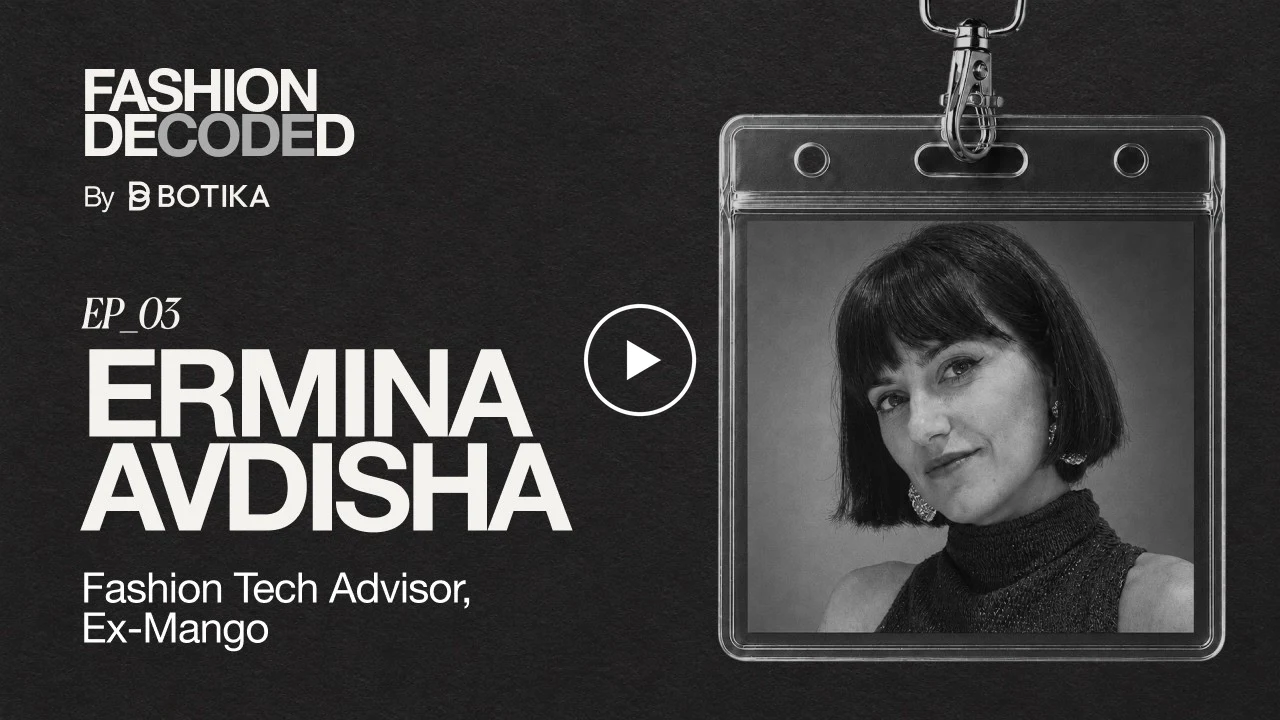
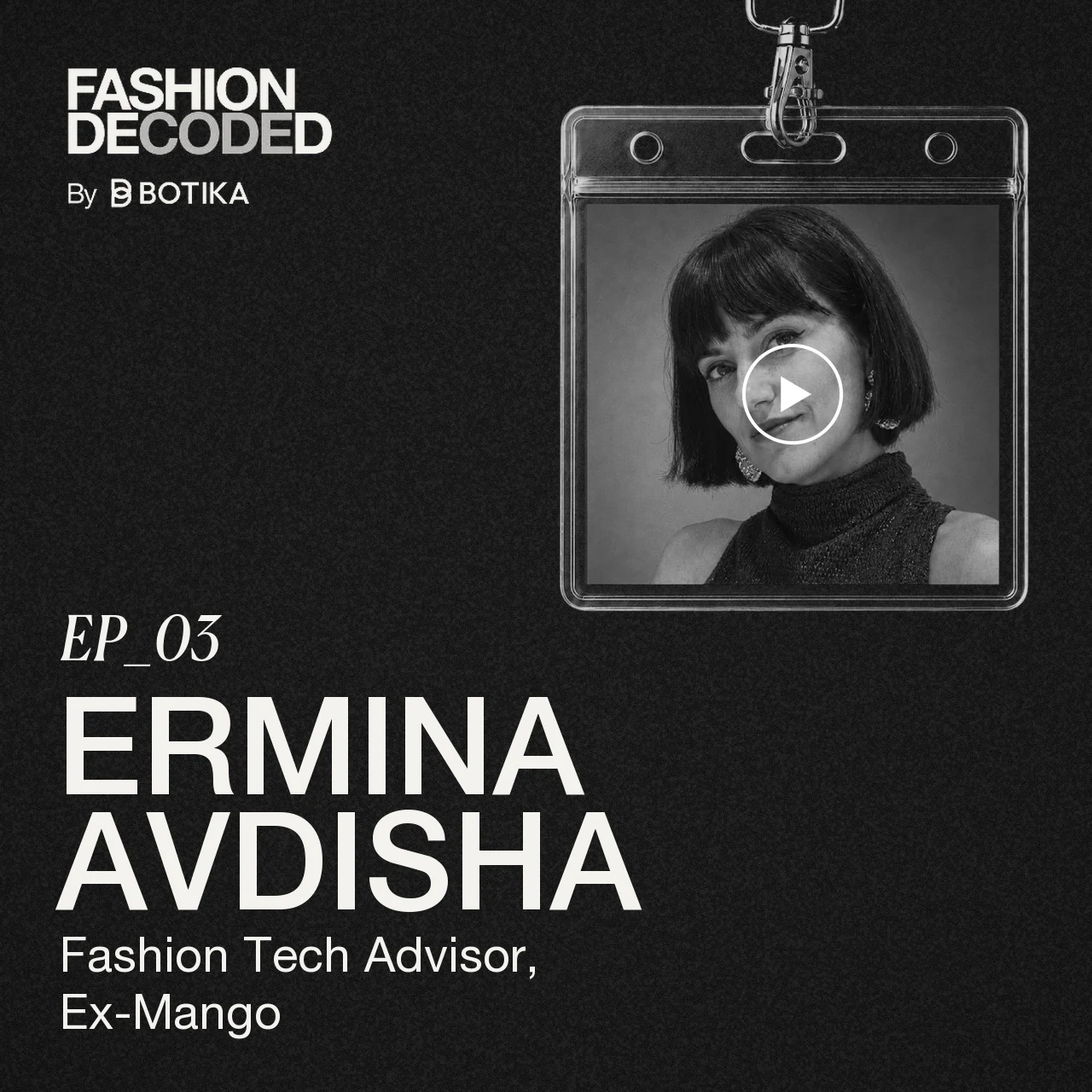

Should fashion brands drop 3D for AI? Not across the board. Every brand Ermina works with still uses 3D tools, Mango included. AI now covers most of the use cases, but not all of them: "It's not solving all the problems. So it's not about the AI versus 3D." Her rule of thumb is the use case. For a new color or a small detail on an existing product, AI is faster. For campaigns and image production, AI is faster and cheaper than a real shoot. For a garment that's completely new, or when fit matters, 3D still makes more sense.
Which looks more real today, AI or 3D? AI, for sure. But an AI image is still only an image: the product data behind it is image data, so some parts of the product can be missed or calculated wrong. Her answer is to use both. Pair the AI image with real product data, and where AI can't reach the result you need, go back to real products, 3D products or 3D digital twins. What matters is "which one is giving you the best results and also as fast as possible in the process."
What did scaling 3D at Mango teach her? When she joined, Mango already had about ten 3D specialists, spread across home, menswear, womenswear, teen and accessories, but 3D wasn't scaling. She mapped how every category worked, tested 3D, AI, virtual and augmented reality, and picked the projects with the highest return. The shift came when the team realized "this wasn't about the 3D technology itself. It was called the digital product creation." The goal was to digitalize products, whatever the tool. Augmented reality was dropped because it didn't serve the business, and AI came in across the whole process.
Will AI images fix returns and shopper trust? Not on their own. Retouched Photoshop images never stopped returns, because sizing was still wrong. "Now you have the same images, but substituted by AI." Virtual try-on helps shoppers judge the style, but the fit of the real product can still be different. AI models that show every body type help, "it's going to help way more," as long as brands also have clearer product data behind them. And trust takes time: "people's trust needs to be built up by time. But that happens with every technology." On labeling, she doesn't see one right answer. It depends on the market and the customer, and "if you're international, you have to pay attention to everybody."
Why do AI tools fail to stick inside brands? Usually because of people and data. A few ambassadors learn a tool well, then "the ambassadors are leaving the company and then leaving as well the knowledge of how the processes are working." Brands buy one or two tools for a single process and never scale them: "you are paying so high for certain things and then you are not actually scaling that much." Her advice starts with clean data and organized processes across the whole value chain, and with training the whole team. What the market still lacks, in her view, is a way to connect tools with each other, so brands can switch without losing their images and data. The same goes for AI agents in creative teams: without clear data and workflows, "maybe you're going to generate more work than actually less work."
Will data or taste decide what imagery brands make? Both, with more weight on data than before. Creative teams "will have more data to take decisions and not relying on only their experience," and AI will give them more options to choose from. But a brand that only follows what customers buy right now can lose its identity. Her example is Dior, which changed how it made products over the years as trends and shopping habits changed, and still kept its core identity. AI can suggest the best direction, "but then it's up to you to choose which direction do you want your brand to go with."
Which fashion jobs will change? All of them, in her view. Creative directors will still be needed to direct the AI and protect the brand, and new roles will appear around managing and structuring AI. But designers, photographers, marketing, production and manufacturing "are all going to change completely." In her words: "The impact is so big. I think that everybody's not realizing it." Her advice to professionals is to adopt these technologies in their own work, or risk being left out. "If you want to drive the change, you have to be in the change."