Inside HELIOT EMIL’s bold new era of AI driven creativity


Paris Fashion Week is full of bold ideas. But HELIOT EMIL’s AW26 presentation wasn’t just about showing a collection. It was about owning every part of how the brand is experienced.
At this year’s Paris Fashion Week, HELIOT EMIL created an experience they called “CYMATICS.” It explored how sound becomes visible through vibration. Patterns, ripples, and movement translated into form. Conceptual, emotional, and precise by design.
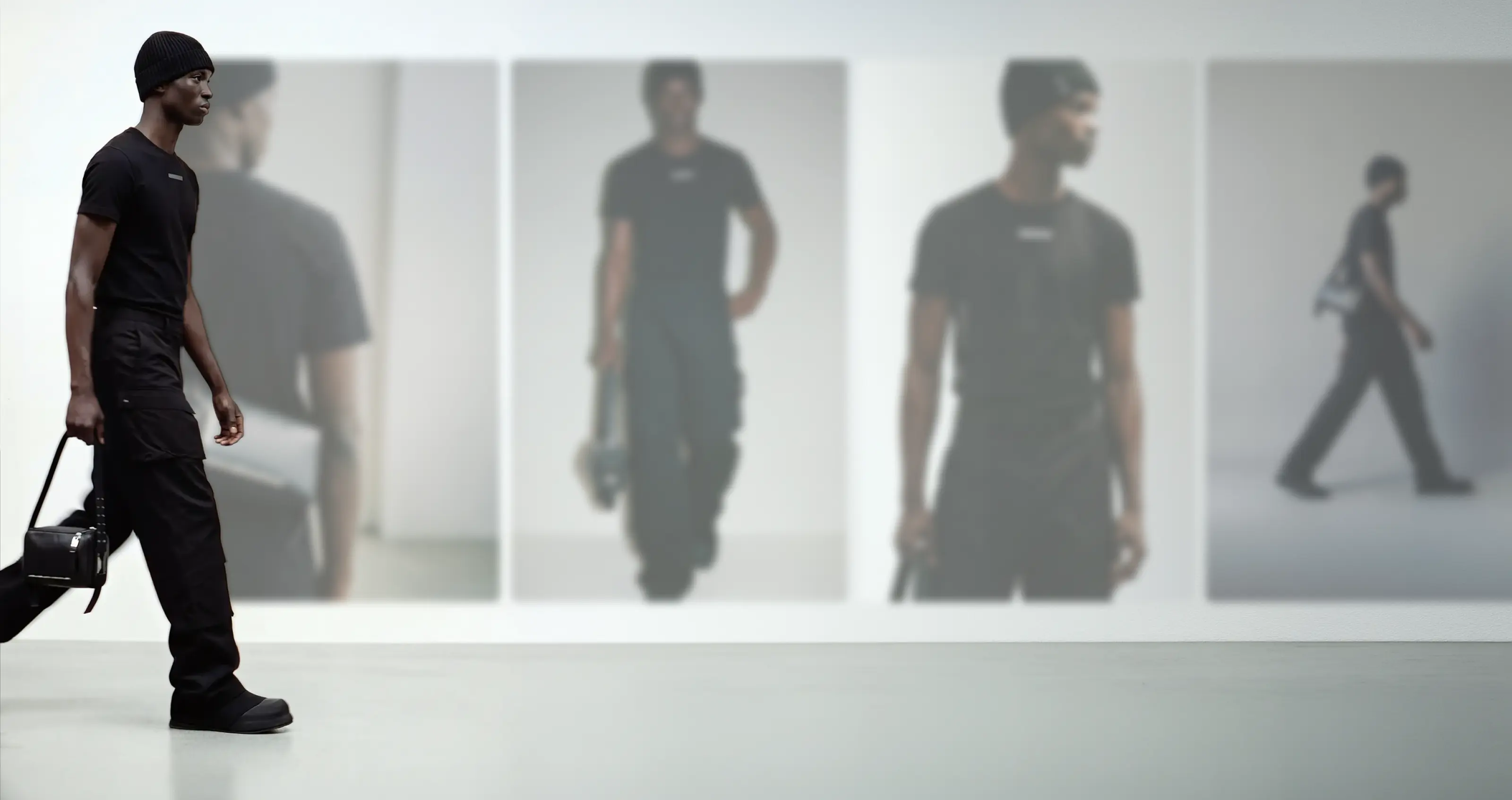
To fully realize that vision, the collection couldn’t live only in a physical space. Its digital expression needed the same level of control, consistency, and intention.
That’s where Botika came in.
From concept to complete brand expression
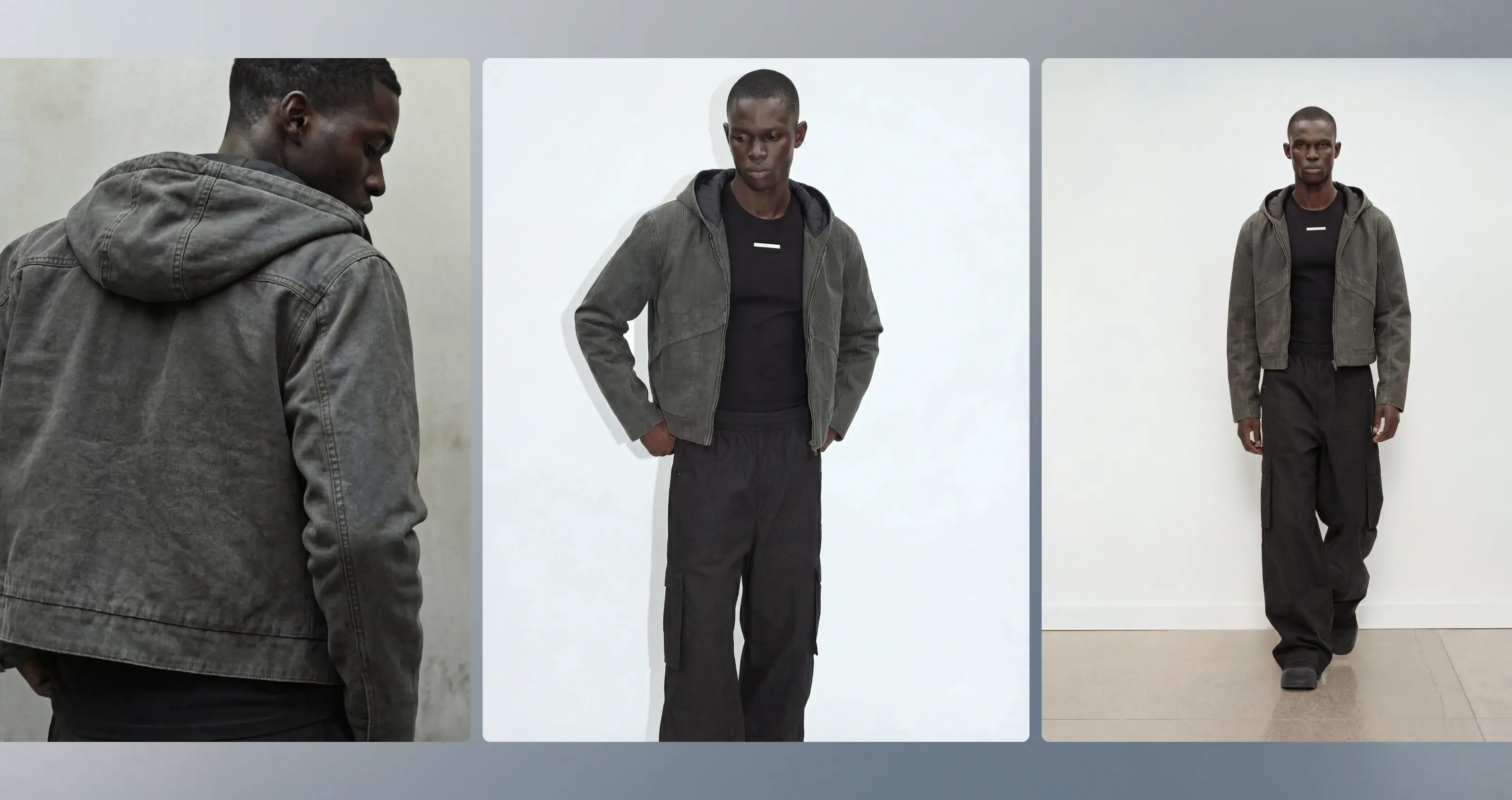
For AW26, we partnered with HELIOT EMIL to develop a fully custom AI fashion model, supported by a set of on brand visuals and video assets designed for use across their showroom and digital presence.
This wasn’t about speed alone. It was about creative accuracy.
The goal was simple but exacting: the model representing the collection needed to be as intentionally designed as the garments themselves. Not a generic face. Not a compromise. A model that could carry the CYMATICS concept with the same precision found in the silhouettes, textures, and movement of the collection.
.webp)
As Julius Juul, Creative Director, put it:
"The collaboration with Botika gave us the ability to create a model that truly represents the brand. It removed some of the usual constraints around casting and production for these visuals, and allowed the imagery to become a direct extension of the concept itself."
The imagery didn’t sit beside the collection. It became part of it.
Why this approach works (and why others haven’t)
Over the past year, several fashion brands have experimented with custom AI models. Some of those experiments were highly public, and not always successful. In a few cases, including Valentino, large investments were made into custom AI work that ultimately struggled with realism, consistency, and production readiness.
The issue wasn’t ambition. It was tooling.
Most AI image tools are built to generate interesting images. They’re not built to support the production realities of fashion: collections, campaigns, repeatability, and brand consistency at scale. Botika was built specifically for those constraints. Rather than relying on general-purpose models, our platform is designed around the way fashion teams actually work.
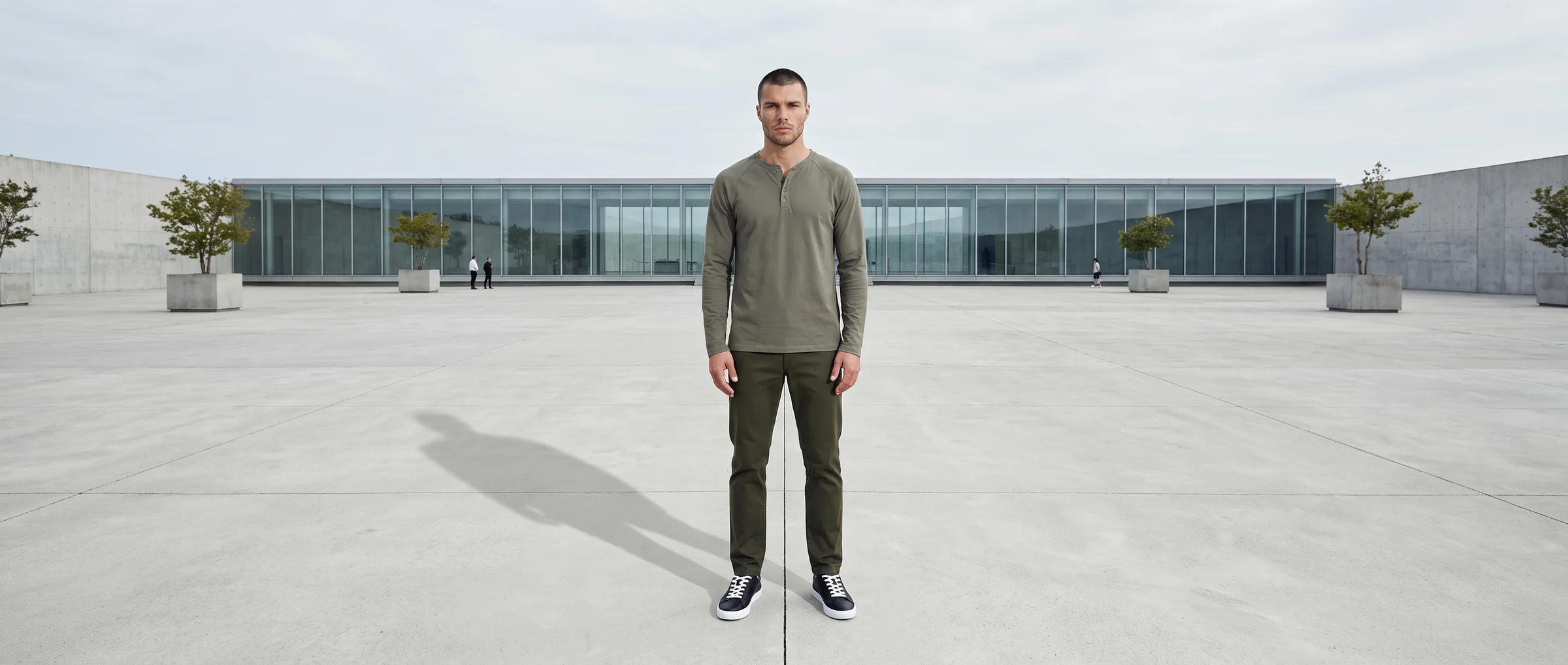
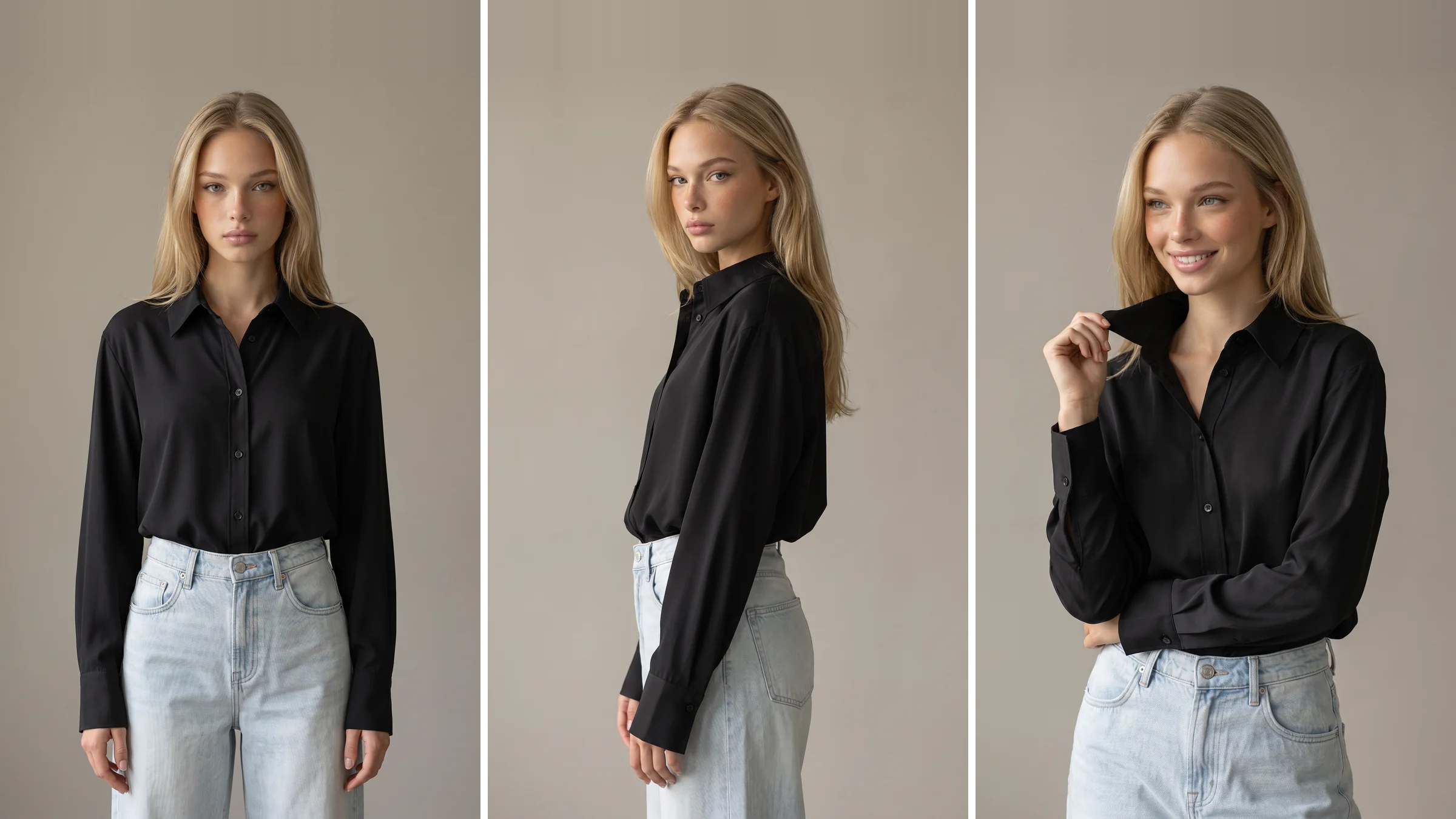
We focus on production-level consistency, so poses, lighting, proportions, and outputs remain aligned across entire collections, not just single images. Every asset passes through a hybrid workflow that combines AI with expert human quality control and retouching, ensuring details like garments, hair, lighting and backgrounds are accurate and ready to publish.
The business impact behind the creative
Thanks to our approach, HELIOT EMIL was able to design a model that matched their exact aesthetic, without being limited by casting availability, schedules, or locations. Visual consistency was maintained across physical and digital environments, while campaign-ready assets were produced without compromising realism.
Instead of adapting their vision to what was available, they built what they needed. The model wasn’t a placeholder. It was a design decision.
It helped HELIOT EMIL protect brand integrity across every visual touchpoint, ensuring that the collection was presented with the same level of intention everywhere it appeared. Physical and digital expression stayed fully aligned, giving the brand control over how the collection is perceived across markets.
At the same time, it reduced reliance on traditional production pipelines, making it easier to scale content without adding complexity. The result was more flexibility without sacrificing creative freedom, allowing the team to move with precision while keeping the vision intact.
In other words, they gained both: Creative control and production efficiency. That combination is rare in fashion, and it’s becoming a competitive advantage for fashion brands.
Why custom AI models matter for fashion brands
.webp)
Fashion brands don’t just design clothes. They design perception.
The model is part of the product experience. The face becomes part of the brand language. This is especially powerful for:
- Campaigns
- Product pages
- Showroom installations
- Digital launches
- Social content
- Editorial visuals
All driven from one coherent visual identity.
Digital, designed with intention
One of the clearest outcomes of this project was how naturally the visuals fit within the overall presentation. They didn’t read as “AI generated.” They felt considered and aligned with the collection.
For buyers, press, and visitors moving through the showroom, the model wasn’t perceived as a technical choice. It was simply part of the experience. When people later learned it was AI, the focus shifted away from the technology and toward what it made possible creatively.
The custom model became part of the collection’s framework, alongside fabric choices, silhouettes, sound, and scent. Designed with the same level of care, it helped HELIOT EMIL maintain control over how their work was expressed across both physical and digital environments, without compromising intent.
<blogcta>

.webp)
